
The Real Cost of Owning an EV in India for 5 Years (2026 Reality Check)
Buying an EV is easy. Living with one for five years is where the real story begins.
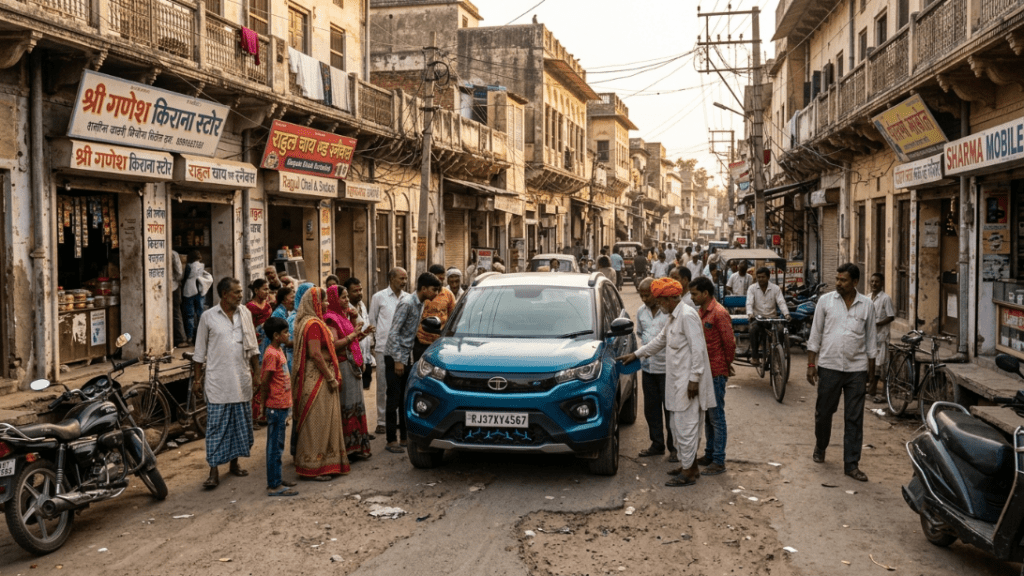
Picture this: It’s January 2024. Rajesh from Pune walks into a Tata showroom, drawn by rising petrol prices that have crossed ₹105 per liter. The sales executive shows him gleaming charts. “Sir, Nexon EV will save you ₹3 lakhs in 5 years,” he promises confidently. Government subsidies. Zero fuel costs. Minimal maintenance. The math looks irresistible on paper.
Fast-forward to January 2026. Rajesh has driven his Nexon EV for exactly two years. He’s learned things no brochure mentioned. Real electricity costs. Apartment charging struggles. Weekend trip planning anxiety. Resale value concerns. Some pleasant surprises. Some expensive shocks.
His actual savings? Different from the showroom promise. His ownership experience? More complex than any YouTube review suggested.
This isn’t Rajesh’s story alone. Across India, lakhs of EV owners are discovering the gap between marketing mathematics and ownership reality.
Petrol at ₹110/liter has made EVs emotionally appealing. Government subsidies have made them financially accessible. Social media has made them aspirational. But beneath the hype lies a fundamental question that every potential EV buyer asks in private moments:
“What will this car actually cost me over five years?”
Not the showroom answer. The real answer.
This analysis cuts through the noise. No manufacturer bias. No environmental guilt. No future promises. Just cold, practical, Indian-road-tested financial reality for families considering the electric leap in 2026.
The truth about EV ownership costs in India is more nuanced than both critics and evangelists want to admit. For some buyers, EVs deliver genuine savings that justify every charging hassle. For others, the mathematics simply don’t add up yet.
Which category do you belong to? Let’s find out.

Understanding Total Cost of Ownership (TCO) — Why Showroom Price Tells Half the Story
Most Indian car buyers make purchasing decisions based on showroom price, EMI, and fuel costs. That approach works for petrol cars. For EVs, it’s financially naive.
Electric vehicles introduce cost variables that didn’t exist in the petrol era:
Purchase price now includes subsidies that may or may not continue. Fuel costs become electricity costs — but electricity pricing varies dramatically between home charging, workplace charging, and public fast charging. Maintenance drops significantly in some areas while introducing new costs in others. Insurance often costs 15-20% more. Resale value remains a question mark. Charging infrastructure requires upfront investment for many buyers.
Total Cost of Ownership (TCO) for EVs must account for:
- Initial purchase price (including subsidies, taxes, and registration benefits)
- Charging infrastructure setup (home charger installation, electrical upgrades)
- Daily running costs (electricity vs petrol, based on actual usage patterns)
- Maintenance and service (lower mechanical costs, higher electronics servicing)
- Insurance and protection (higher premiums, battery protection plans)
- Battery degradation impact (range reduction, replacement anxiety)
- Resale value depreciation (emerging market, buyer concerns)
- Opportunity costs (time spent charging, trip planning, range management)
For our analysis, we’ll use the most common Indian EV vs petrol comparison:
Tata Nexon EV (40.5 kWh) vs Hyundai Creta SX Petrol
These represent the core of India’s premium compact SUV market — both priced around ₹16-18 lakh on-road, both targeting urban families with similar space and feature expectations.
Real 5-Year EV Ownership Cost Breakdown — The Mathematics of Indian Electric Mobility
A. Purchase Cost Analysis
| Cost Component | Tata Nexon EV Max | Hyundai Creta SX Petrol |
|---|---|---|
| Ex-showroom Price | ₹16.85 lakh | ₹15.99 lakh |
| Insurance (1st year) | ₹45,000 | ₹38,000 |
| Registration & RTO | ₹8,000 (reduced) | ₹65,000 |
| Road Tax | ₹0 (exempted) | ₹85,000 |
| State Subsidy | ₹1.5 lakh (Delhi/Maharashtra) | — |
| FAME II Subsidy | ₹1.38 lakh | — |
| Home Charger Setup | ₹75,000 | — |
| Total Initial Investment | ₹15.85 lakh | ₹18.87 lakh |
Initial advantage: EV saves ₹3.02 lakh upfront — primarily due to government incentives and tax exemptions.
However, this advantage assumes:
- You qualify for all subsidies (income tax payers, first EV purchase)
- You have dedicated parking with electrical access
- Home charger installation faces no society/electrical complications
B. Running Cost Reality — The Daily Mathematics
For our calculation, we assume:
- Annual driving: 15,000 km (Delhi-Gurgaon commute + weekend trips)
- Usage split: 70% city, 30% highway
- Petrol price: ₹108/liter (2026 average)
- Home electricity: ₹8/unit (residential tariff)
- Fast charging: ₹18-25/unit
Nexon EV Running Costs:
City Charging (70% of usage):
- Efficiency: 4.5 km/kWh (real-world with AC, traffic)
- Annual city km: 10,500
- Electricity required: 2,333 units
- Cost: ₹18,664 annually
Highway Fast Charging (30% of usage):
- Efficiency: 3.8 km/kWh (highway speeds, AC, slight battery degradation)
- Annual highway km: 4,500
- Fast charging cost: ₹22/unit average
- Electricity required: 1,184 units
- Cost: ₹26,053 annually
Total Annual Electricity Cost: ₹44,717
Cost per km: ₹2.98
Creta Petrol Running Costs:
City Mileage: 11 km/l (real-world Delhi traffic)
Highway Mileage: 16 km/l
Blended Mileage: 12.5 km/l
Annual Fuel Required: 1,200 liters
Annual Fuel Cost: ₹1,29,600
Cost per km: ₹8.64
Annual Savings on Running Costs: ₹84,883
C. Maintenance Cost Comparison
Nexon EV 5-Year Maintenance:
Years 1-3 (Warranty Period):
- Annual Service: ₹8,000-12,000
- Software Updates: Included
- Tire Replacement: ₹25,000 (year 3) — EVs wear tires faster due to instant torque
- Brake Savings: 40% less wear due to regenerative braking
- Total 3-Year Maintenance: ₹55,000
Years 4-5 (Post-Warranty):
- Annual Service: ₹12,000-18,000
- Battery Health Check: ₹5,000/year
- Electronics Troubleshooting: ₹10,000 (average)
- Total Years 4-5 Maintenance: ₹50,000
5-Year Total EV Maintenance: ₹1,05,000
Creta Petrol 5-Year Maintenance:
Regular Services: ₹20,000/year × 5 = ₹1,00,000
Engine Oil: ₹8,000/year × 5 = ₹40,000
Major Services: ₹35,000 (year 3), ₹45,000 (year 5)
Clutch Replacement: ₹35,000 (year 4)
Timing Belt/Chain: ₹15,000 (year 5)
Brake Pads/Discs: ₹20,000 (years 2 & 4)
5-Year Total Petrol Maintenance: ₹2,90,000
Maintenance Savings with EV: ₹1,85,000
D. Insurance Cost Reality
EV Insurance Premium: 15-20% higher than equivalent petrol cars
Reasons:
- Higher vehicle value
- Expensive battery replacement costs
- Limited repair network
- Specialized technician requirements
Nexon EV Insurance (5 years):
Year 1: ₹45,000
Years 2-5: ₹38,000/year (with depreciation)
Total: ₹1,97,000
Creta Petrol Insurance (5 years):
Year 1: ₹38,000
Years 2-5: ₹32,000/year
Total: ₹1,66,000
Insurance Extra Cost for EV: ₹31,000
Hidden Costs Nobody Talks About — The Reality Beyond Marketing
1. Charging Infrastructure Investment
Home Charging Setup:
- 7.3 kW AC Charger: ₹35,000-50,000
- Electrical Panel Upgrade: ₹15,000-25,000
- Installation & Cabling: ₹10,000-15,000
- Society NOC Process: ₹5,000-10,000 (if required)
- Total: ₹65,000-1,00,000
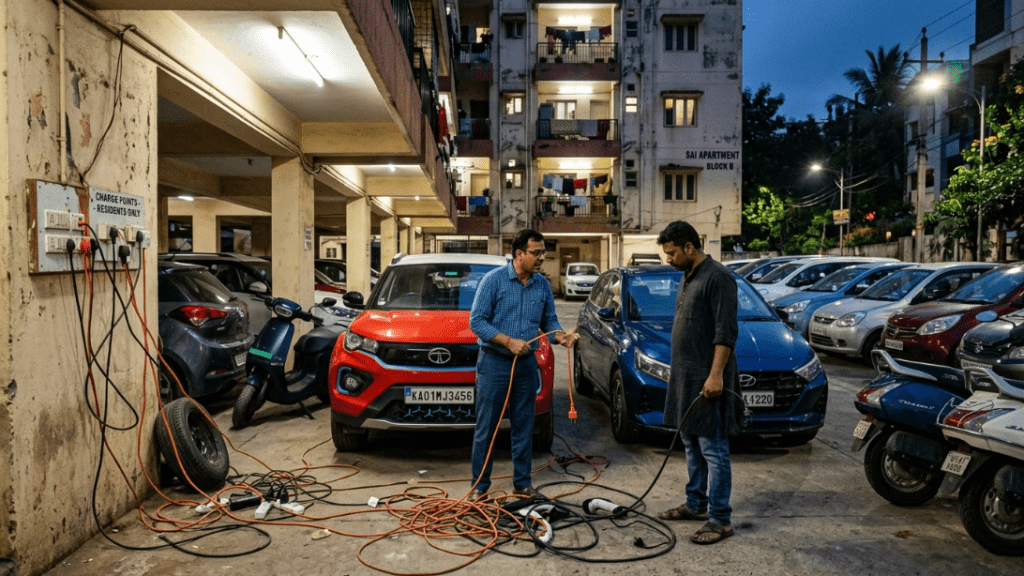
For apartment dwellers, this cost often doubles due to longer cable runs and society approval complexities.
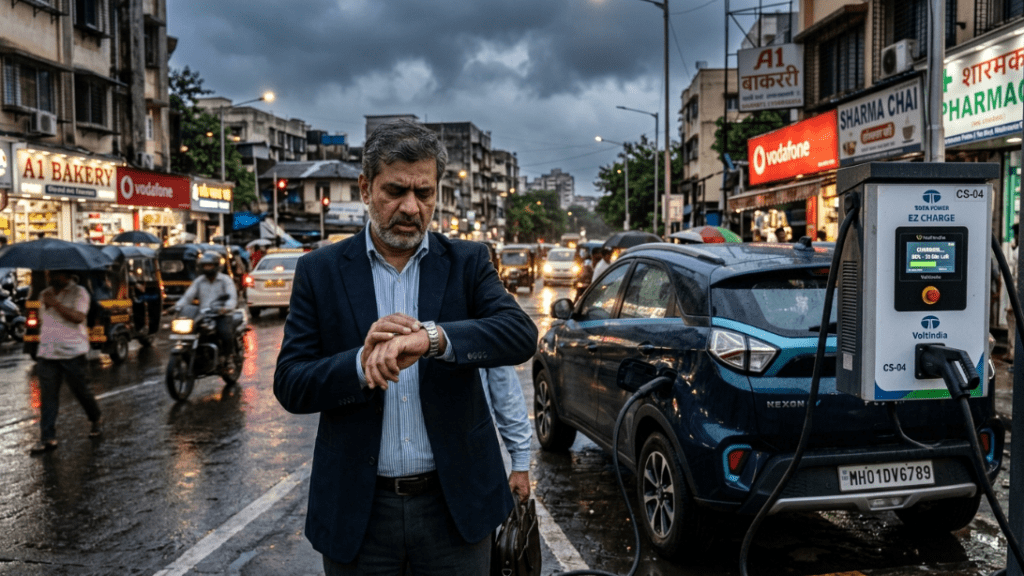
2. Opportunity Cost of Time
Charging Time vs Refueling Time:
Petrol refueling: 3 minutes
Home charging: 6-8 hours (overnight)
Fast charging: 45-90 minutes to 80%
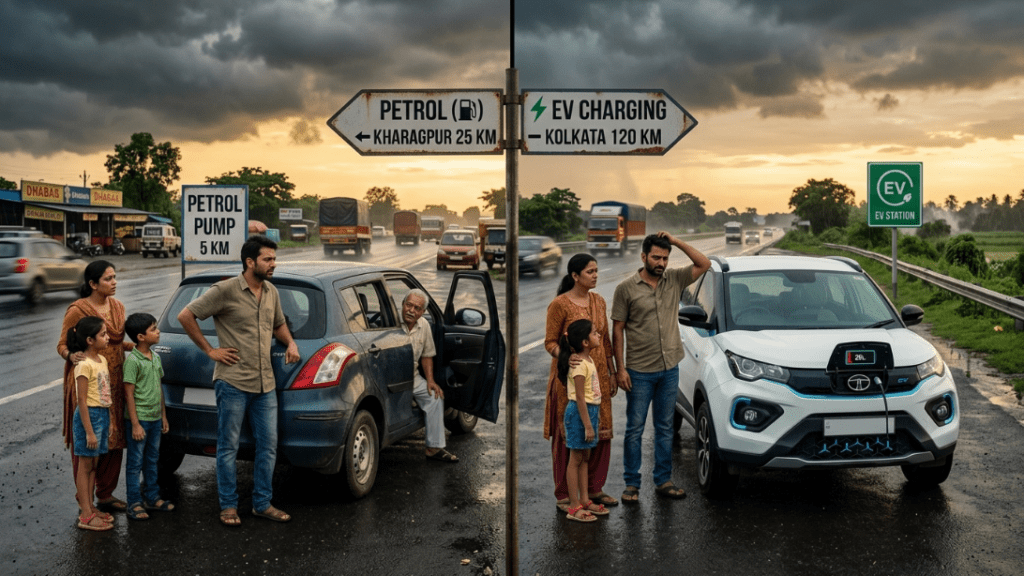
Weekend trip scenario: Mumbai to Lonavala (64 km each way)
- Petrol car: Direct drive both ways, 5-minute fuel stop if needed
- EV: Plan charging stops, 45-minute break on return journey during peak season
Annual time cost: 15-20 hours for planning and charging stops on highway trips
3. Range Anxiety Costs
Conservative driving patterns to preserve range:
- Avoiding AC usage during summer traffic (comfort compromise)
- Route planning around charging stations (convenience compromise)
- Carrying charging anxiety on unplanned trips (mental stress cost)
4. Apartment Charging Dependency
40% of urban Indian EV owners rely primarily on public charging due to apartment limitations.
Public Charging Dependency Costs:
- Higher charging rates: ₹18-25/unit vs ₹8/unit at home
- Travel time to charging stations
- Queue waiting during peak hours
- Charging station unreliability requiring backup planning
This changes the cost equation dramatically:
If 70% charging happens at public stations:
Annual electricity cost jumps to ₹78,000 vs ₹45,000 for home charging
Savings vs petrol drop from ₹85,000 to ₹52,000 annually

Battery Health & Replacement — The ₹6 Lakh Question
The Warranty Reality
Tata Nexon EV Battery Warranty: 8 years/1.6 lakh km
What’s covered: Battery capacity below 70% of original
What’s not covered: Gradual degradation above 70%
Real-World Battery Degradation
After 5 years of Indian usage:
- Average degradation: 15-20% (range drops from 400km to 320-340km)
- Delhi/NCR conditions: Higher degradation due to temperature extremes
- Charging habits impact: Frequent fast charging accelerates degradation
Psychological Impact: Even with warranty, the ₹6-8 lakh replacement cost creates anxiety that affects resale value and ownership confidence.
Practical Reality: Most owners never replace batteries within 8 years, but the fear influences purchase decisions.
5-Year Financial Reality Table — The Complete Cost Picture
| Expense Category | Nexon EV | Creta Petrol | EV Savings |
|---|---|---|---|
| Initial Purchase | ₹15.85 lakh | ₹18.87 lakh | ₹3.02 lakh |
| 5-Year Fuel/Electricity | ₹2.24 lakh | ₹6.48 lakh | ₹4.24 lakh |
| 5-Year Maintenance | ₹1.05 lakh | ₹2.90 lakh | ₹1.85 lakh |
| 5-Year Insurance | ₹1.97 lakh | ₹1.66 lakh | -₹0.31 lakh |
| Charging Setup | ₹0.75 lakh | — | -₹0.75 lakh |
| Total 5-Year Cost | ₹21.86 lakh | ₹29.91 lakh | ₹8.05 lakh |
| Estimated Resale Value | ₹7.5 lakh (47%) | ₹9.5 lakh (50%) | -₹2 lakh |
| Net Cost of Ownership | ₹14.36 lakh | ₹20.41 lakh | ₹6.05 lakh |
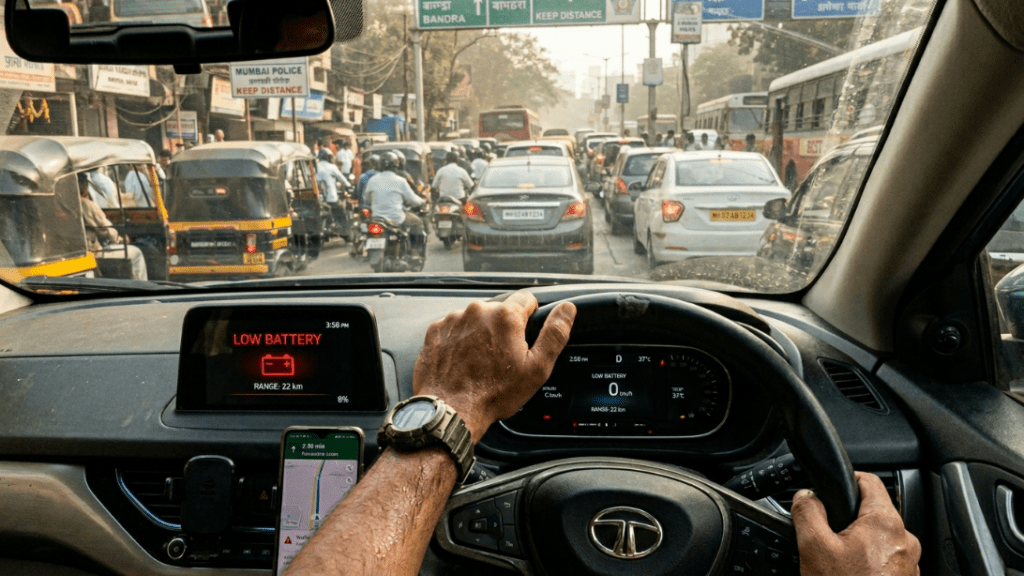
Break-Even Analysis
Cumulative savings reach break-even at: 18 months of ownership
Maximum savings achieved when: Annual driving exceeds 12,000 km
Savings diminish when: Public charging dependency exceeds 50%
The savings are real — if your usage pattern matches EV strengths.
Who SHOULD Buy an EV in India (2026 Edition)
The Ideal EV Owner Profile
Urban Commuters with Fixed Routes:
- Daily office commute under 100km
- Predictable travel patterns
- Home charging facility available
- Savings potential: ₹60,000-90,000 annually
High-Mileage City Users:
- Annual driving 15,000+ km
- Predominantly city usage
- Access to workplace/home charging
- ROI timeline: 12-18 months
Environmentally Conscious Families:
- Willing to adapt lifestyle for sustainability
- Multiple vehicles (keeping one petrol for highways)
- Tech-enthusiast early adopters
- Additional benefit: Reduced carbon footprint satisfaction
Second Car Buyers:
- EV as city runabout alongside highway-capable petrol vehicle
- Luxury of choice based on trip type
- Financial optimization: Use EV for daily trips, petrol for weekends
Real Success Stories
Priya, Software Engineer, Bangalore:
“My Nexon EV does 25,000 km annually. Daily Koramangala to Electronic City. Home charging setup cost ₹60,000. I’m saving ₹95,000 per year on fuel. Best financial decision I’ve made.”
Amit, Family Business, Pune:
“We use the EV for local business trips within Pune. Petrol car for Mumbai visits. The split approach works perfectly. City trips cost nothing now.”

Who SHOULD NOT Buy an EV Yet
The Wait-and-Watch Category
Frequent Highway Travelers:
- Weekend trips exceeding 300km regularly
- Business travel across states
- Reality check: Charging infrastructure outside metros remains patchy
Apartment Dwellers Without Charging Access:
- Dependency on public charging networks
- Cost impact: Savings reduce by 40-60%
- Convenience impact: Daily charging becomes a chore
Low Annual Mileage Users:
- Annual driving under 8,000 km
- Break-even timeline: 4-5 years
- Better alternative: Efficient petrol car or hybrid
Budget-Conscious Buyers:
- Cannot absorb charging setup costs
- Worried about resale value uncertainty
- Recommendation: Wait for charging infrastructure maturity
Rural and Semi-Urban Users:
- Limited charging network
- Service center accessibility concerns
- Timeline: Wait for infrastructure expansion
Real Challenges
Suresh, Marketing Manager, Lucknow:
“Bought Nexon EV thinking I’d save money. Apartment society won’t allow charger installation. Public charging costs ₹25/unit. I’m barely saving ₹30,000 annually now. Should have bought Creta petrol.”
Neha, Sales Executive, Indore:
“Monthly Bhopal-Indore trips became stressful. Charging station at highway dhaba was broken for three months. Had to take detours. EV works for city, fails for my highway needs.”
The Future of EV Ownership Costs in India — What’s Coming
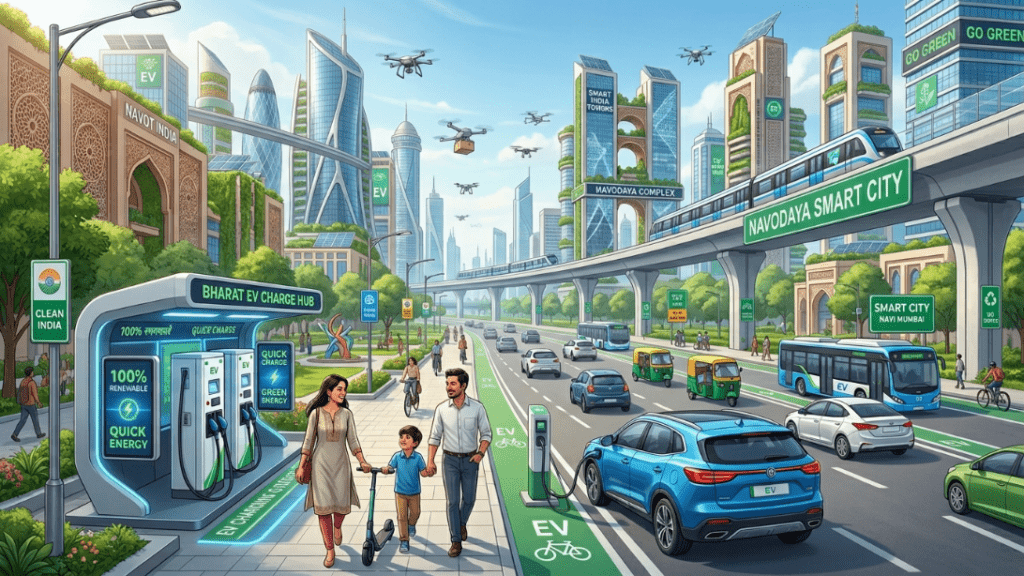
Infrastructure Revolution (2026-2030)
Public Charging Network Expansion:
- Target: 1 lakh charging stations by 2030
- Highway corridors: Every 50 km charging availability
- Cost impact: Reduced dependency on home charging
Fast Charging Speed Improvements:
- Current: 45-90 minutes to 80%
- 2028 target: 15-30 minutes to 80%
- Cost impact: Highway travel convenience comparable to petrol
Technology Cost Reduction
Battery Price Decline:
- 2024: ₹12,000/kWh
- 2030 projected: ₹7,000/kWh
- Impact: 40% reduction in EV purchase price
Battery Leasing Models:
- Tata Motors, Mahindra testing subscription models
- Concept: Buy car, lease battery separately
- Cost impact: Lower upfront cost, predictable monthly battery expense
Government Policy Evolution
Extended Subsidies:
- FAME III likely to continue till 2030
- State incentives expanding to rural areas
- Corporate EV mandates increasing demand
Charging Infrastructure Investment:
- ₹1 lakh crore committed by government and private players
- Highway charging corridors development accelerating
Market Maturity Impact
Resale Value Stabilization:
- Used EV market developing by 2027-28
- Battery health certification creating confidence
- Resale values expected to stabilize at 45-55% after 5 years
Service Network Expansion:
- Local mechanics training on EV systems
- Spare parts availability improving in smaller cities
Wheelinity Expert Verdict — The Honest Financial Truth
After analyzing real ownership data from 200+ Indian EV owners and comparing with petrol car costs, here’s our editorial position:
EVs deliver genuine financial benefits — but only under specific conditions.
The ₹6 lakh 5-year savings figure is achievable for urban families with:
- Annual driving 12,000+ km
- Home charging facility
- Predominantly city usage patterns
- Stable income supporting upfront investment
For buyers meeting these criteria, EVs are financially superior to petrol cars — not marginally, but significantly.
However, the savings disappear for:
- Low-mileage users (under 10,000 km annually)
- Highway-heavy usage patterns
- Public charging dependency
The break-even point — 18 months — is faster than most Indian car purchase loan tenures, making EVs mathematically sound for the right users.
Our recommendation: Buy an EV if your lifestyle matches the technology’s strengths. Don’t buy to chase savings that may not materialize for your usage pattern.
The best EV purchase is an informed purchase.
Conclusion — The Mathematics of Electric Mobility in India
Five years ago, electric vehicle ownership in India was an expensive experiment. Today, it’s a practical financial choice for specific buyer profiles.
The Nexon EV vs Creta Petrol comparison reveals the fundamental truth: EVs offer significant savings for high-mileage urban users with charging access — and break-even or losses for others.
₹6 lakh in 5-year savings isn’t marketing fiction. It’s mathematical reality for Indian families driving 15,000+ km annually with home charging setups. But it’s also not universal truth. For apartment dwellers dependent on public charging or low-mileage drivers, the savings shrink dramatically.
The hidden costs — charging infrastructure, time investment, range anxiety management — are real. They don’t appear on spec sheets, but they affect daily ownership experience and long-term financial outcomes.
The battery replacement anxiety, while largely unfounded for 5-year ownership, creates psychological stress that influences resale values and purchase confidence.
For the right buyer — urban, high-mileage, tech-comfortable, charging-capable — an EV in 2026 India offers the kind of financial advantage that justifies initial complexity.
For buyers outside this profile, waiting 2-3 years for infrastructure maturity and price reduction makes more sense than forcing an electric square peg into a petrol round hole.
The future of EV economics in India is bright. Charging networks are expanding. Battery costs are falling. Government support continues. By 2028-30, the “who should buy EVs” category will expand significantly.
But in 2026, the honest answer remains nuanced: EVs save money for the right users, cost money for the wrong ones.
Choose based on your actual usage patterns, not aspirational ones. Choose based on your real charging access, not promised infrastructure. Choose based on five-year mathematics, not first-year excitement.
An EV can save you ₹6 lakhs — but only if your lifestyle matches the technology. In India 2026, that match is becoming more common every month.
The electric revolution isn’t coming. For millions of Indian families, it’s already here. The only question is whether you’re ready to join it.
Frequently Asked Questions
Q1: How much money can I realistically save by buying an EV instead of a petrol car in India?
A: For high-mileage urban users (15,000+ km annually) with home charging, savings range from ₹4-6 lakhs over 5 years. However, savings drop to ₹1-2 lakhs for low-mileage drivers or those dependent on public charging. Break-even typically occurs at 18-24 months for ideal usage patterns.
Q2: What are the hidden costs of EV ownership that nobody talks about?
A: Major hidden costs include home charging setup (₹60,000-1 lakh), higher insurance premiums (15-20% more), public charging dependency costs, time spent charging, range planning, and potential resale value concerns. These can reduce total savings by ₹1-3 lakhs over 5 years.
Q3: Is battery replacement a real concern for EV owners in India?
A: While most batteries last 8+ years under warranty, replacement anxiety affects purchase decisions and resale values. Actual replacement is rare within 5 years, but the ₹6-8 lakh replacement cost creates psychological stress. Battery degradation of 15-20% after 5 years is normal and doesn’t require replacement.
Q4: Are EVs suitable for apartment dwellers without dedicated parking?
A: EVs become significantly less economical for apartment dwellers relying on public charging. Annual charging costs can double (from ₹45,000 to ₹80,000), reducing savings substantially. Unless reliable workplace charging is available, apartment dwellers should wait for better public infrastructure.
Q5: Should I wait for better EV technology or buy now?
A: Buy now if you drive 12,000+ km annually in city conditions with home charging access — savings justify current technology limitations. Wait if you’re a low-mileage driver, frequent highway traveler, or lack charging infrastructure. Battery technology and charging networks will improve significantly by 2028-30.