
Hidden Features in Indian Cars Most Owners Never Use
Hidden Features in Indian Cars are often overlooked by owners who use only a fraction of their vehicle’s capabilities. From Follow Me Home headlamps and TPMS to ADAS, Hill Hold Assist, and air purifiers, modern Indian cars are packed with smart technology that enhances safety, comfort, and convenience. In this guide, we reveal 17 hidden features that most Indian car owners never use but should start using today.
Let’s open every secret door.

1. Follow Me Home Headlamps — Your Car’s Nighttime Escort
A. What Is This Feature?
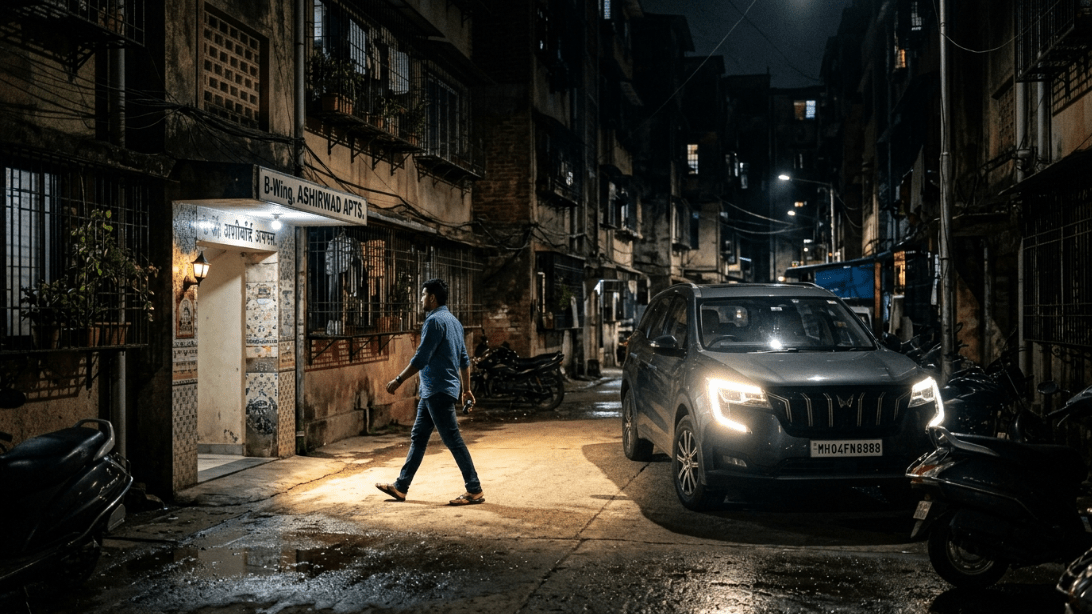
Follow Me Home (FMH) headlamps keep your car’s headlights illuminated for 30-120 seconds after you switch off the engine and lock the car. The light follows you from your car to your front door — illuminating dark driveways, parking areas, and colony roads.
B. How It Works
Imagine this: It’s 11 PM. You’ve just returned from a late dinner in South Delhi. Your apartment complex’s parking area is dimly lit — or not lit at all. You switch off the engine. The headlamps stay on. You step out, walk to your building entrance, and the light guides your path.
No fumbling for phone flashlights. No stumbling over uneven surfaces. No walking into darkness.
In most cars, you activate this by pushing the indicator stalk forward after switching off the engine. The headlamps remain on for a preset duration — usually 30, 60, or 120 seconds depending on your settings.
C. Why Most Owners Never Use It
Because nobody told them it exists.
This feature is rarely demonstrated during car delivery. Sales executives focus on sunroof, touchscreen, and alloy wheels — the features that sell cars. Follow Me Home headlamps don’t appear on Instagram reels. They’re not in the spec sheet highlight reel.
Most owners discover this feature by accident — usually when they accidentally push the indicator stalk after parking and notice their headlamps staying on.
D. Why It’s Actually Useful
For Indian conditions, this is genuinely valuable.
Gurugram’s DLF Phase 3 has lanes where streetlights work on alternate days. Noida Extension’s new societies have parking areas that are pitch dark. Rural homes across India lack proper exterior lighting.
Follow Me Home headlamps aren’t just convenient — they’re a safety feature. Dark parking areas attract unwanted elements. Well-lit paths deter potential threats.
Additionally, this feature helps you spot obstacles — uneven surfaces, stray animals, puddles, or potholes — between your car and your doorstep.
E. Cars That Offer This Feature
- Hyundai Creta, Venue, Verna, Tucson
- Tata Nexon, Harrier, Safari, Curvv
- Kia Seltos, Sonet, Carens
- Mahindra XUV700, XUV 3XO, Scorpio-N
- Honda Elevate
- Volkswagen Taigun, Virtus
- Skoda Slavia, Kushaq
- Maruti Suzuki Grand Vitara
2. Auto Window Roll-Up with Key Fob — The Rain Rescue Feature
A. What Is This Feature?
Ever walked away from your car and realized you left a window open? Maybe it was raining. Maybe you were parked in a dusty area. Maybe security was a concern.
Auto window roll-up lets you close all windows remotely using your car key fob — simply by long-pressing the lock button.
B. How It Works
Park your car. Walk away. Realize a window is open. Press and hold the lock button on your key fob for 3-5 seconds. All windows roll up automatically. You don’t need to go back to the car. You don’t need to start the engine.
Some cars also support auto window roll-down — pressing and holding the unlock button opens all windows remotely. Perfect for ventilating a scorching hot car on Indian summer afternoons before you reach it.
C. Why Most Owners Never Use It
Because they don’t know the key fob can do more than lock and unlock.
Most Indian owners use their key fob for three functions: lock, unlock, and boot release. The long-press window function is almost never mentioned during delivery.
Some owners accidentally discover it when they press the lock button too long and notice windows moving — which, honestly, can be terrifying the first time.
D. Why It’s Actually Useful
Monsoon season in Mumbai. You parked your car at Dadar station. The sky was clear. Two hours later, a typical Mumbai downpour begins. You’re 45 minutes away. Your driver-side window is cracked open.
Without this feature, you’d arrive to a flooded driver seat and a ruined interior. With this feature, you simply pull out your phone, call someone at home, and ask them to long-press the lock button on your spare key. Problem solved.
More practically: You’re at a mall parking lot. You see your window open from a distance. Instead of walking all the way back, press and hold lock. Done.
E. Cars That Offer This Feature
- Hyundai Creta, Verna, Tucson, Alcazar
- Kia Seltos, Sonet, Carens
- Tata Harrier, Safari, Nexon
- Mahindra XUV700, Scorpio-N
- Skoda Slavia, Kushaq
- Volkswagen Virtus, Taigun
- Honda City, Elevate
- Toyota Urban Cruiser Hyryder
3. Cruise Control Resume Function — The Highway Game-Changer
A. What Is This Feature?
Most Indian car owners know about cruise control. Fewer know about the “Resume” button — and even fewer understand how dramatically it transforms highway driving.
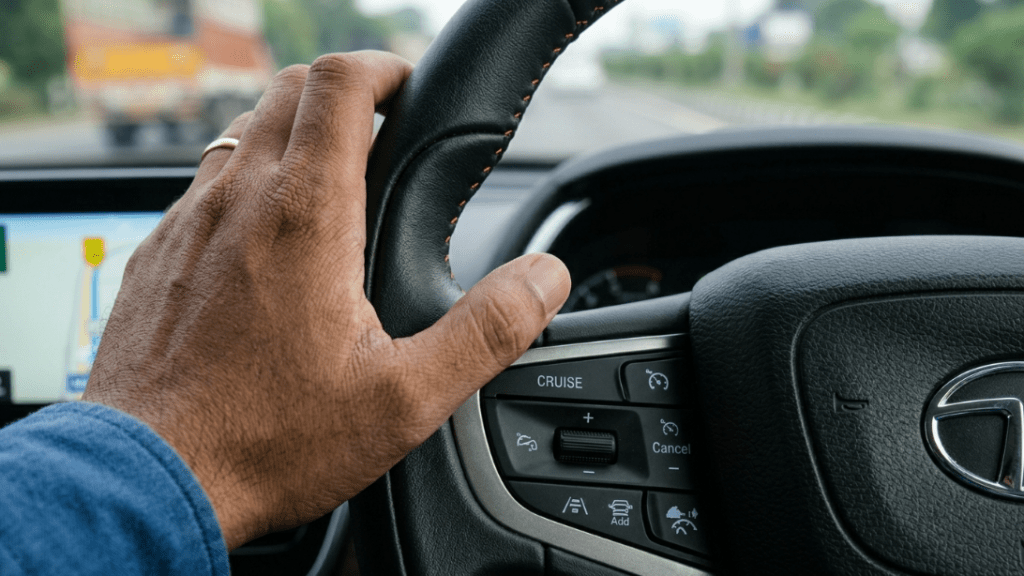
The Resume function allows your car to return to your previously set cruise speed after braking — without needing to accelerate manually and re-set the speed.
B. How It Works
You’re cruising on the Jaipur-Delhi expressway at 100 km/h with cruise control active. A truck appears in your lane. You tap the brake to slow down. Cruise control deactivates automatically. You overtake the truck.
Now, here’s the magic: Instead of accelerating back to 100 km/h manually and then re-engaging cruise control, you simply press the “Resume” button. The car smoothly accelerates back to your previously set 100 km/h.
One button. No manual acceleration. No re-programming. Seamless continuation.
C. Why Most Owners Never Use It
Cruise control itself is underused in India. A 2024 survey by an automotive research firm found that over 65% of Indian car owners who have cruise control have never activated it once.
The Resume function? Even fewer owners know it exists. The button is usually marked “RES” on the steering wheel, and most owners assume it’s a reset button for the trip computer.
Sales executives rarely explain cruise control beyond a brief mention, and the Resume function almost never gets a demonstration.
D. Why It’s Actually Useful
Indian highways demand constant speed adjustments. Trucks, tractors, two-wheelers, pedestrians, animals — every few kilometers, you’re braking and re-accelerating.
Without Resume: Brake → Manually accelerate → Check speedometer → Engage cruise → Adjust speed. Five steps.
With Resume: Brake → Press Resume. Two steps.
Over a 500-kilometer highway drive, this saves hundreds of micro-actions. Your right foot gets genuine rest. Your fuel efficiency improves because the car’s cruise control manages acceleration more efficiently than your foot. Your fatigue levels drop significantly.
Pro tip: In cars with Adaptive Cruise Control (ACC), the Resume function is even smarter. The car not only returns to your set speed but also maintains safe distance from the vehicle ahead automatically.
E. Cars That Offer This Feature
- All cars with cruise control (essentially every car on this list)
- Especially effective in: Hyundai Verna (ACC), Kia Seltos (ACC), Mahindra XUV700 (ACC), Tata Harrier, Skoda Slavia, Honda City
4. Electronic Stability Control (ESC) — The Invisible Lifesaver
A. What Is This Feature?
Electronic Stability Control (ESC) is perhaps the most important safety feature in modern Indian cars — and one of the least understood.
ESC automatically detects when your car is losing traction — skidding, sliding, or veering off your intended path — and applies individual brakes to specific wheels to bring the car back under control.
B. How It Works
You’re driving on the Mumbai-Pune expressway at 100 km/h. Rain suddenly reduces visibility. You take a curve slightly too fast. The rear of the car starts sliding outward — oversteer.
Before your brain processes the danger, ESC has already intervened. It applies the brake on the front outer wheel, reduces engine power slightly, and guides the car back onto your intended path. The entire intervention takes milliseconds.
You feel a slight vibration in the brake pedal and a gentle correction in the steering. That’s it. You’re safe. And you might not even realize the system just saved your life.
C. Why Most Owners Never Use It
Because ESC works silently and invisibly. There’s no button to press (it’s always active in most cars). There’s no dramatic activation sequence. You only notice it when it saves you — and even then, you might not realize what happened.
Some owners actually switch ESC off — typically through a dashboard button — because they believe it “restricts” their driving. This is extremely dangerous, especially on Indian roads.
Others confuse ESC with traction control and assume it’s only for off-road situations. It’s not. ESC is for every road, every condition, every drive.
D. Why It’s Actually Useful
Indian roads are ESC’s ultimate testing ground:
- Monsoon-slicked expressways where aquaplaning is common
- Mountain roads in Himachal and Uttarakhand with sharp blind curves
- High-speed highway sections with unexpected gravel or debris
- Emergency lane changes to avoid trucks or animals
- Night driving when road conditions are difficult to judge
According to global safety research, ESC reduces fatal single-vehicle crashes by approximately 49%. In India, where road accident fatality rates are among the world’s highest, ESC is literally a lifesaver.
Golden rule: Never, ever switch ESC off on Indian roads. The button exists primarily for controlled track conditions — not for our highways and city streets.
E. Cars That Offer This Feature
- Hyundai Creta, Verna, Tucson, Alcazar
- Kia Seltos, Sonet, Carens
- Tata Nexon, Harrier, Safari, Curvv
- Mahindra XUV700, XUV 3XO, Scorpio-N
- Honda Elevate, City
- Toyota Urban Cruiser Hyryder
- Skoda Slavia, Kushaq
- Volkswagen Virtus, Taigun
- Maruti Suzuki Grand Vitara, Fronx
5. TPMS — Tyre Pressure Monitoring System and Its Hidden Benefits
A. What Is This Feature?
TPMS (Tyre Pressure Monitoring System) continuously monitors your tyre pressure and alerts you when it drops below safe levels. But here’s the hidden intelligence most owners miss: TPMS does far more than just warn about flat tyres.
B. How It Works
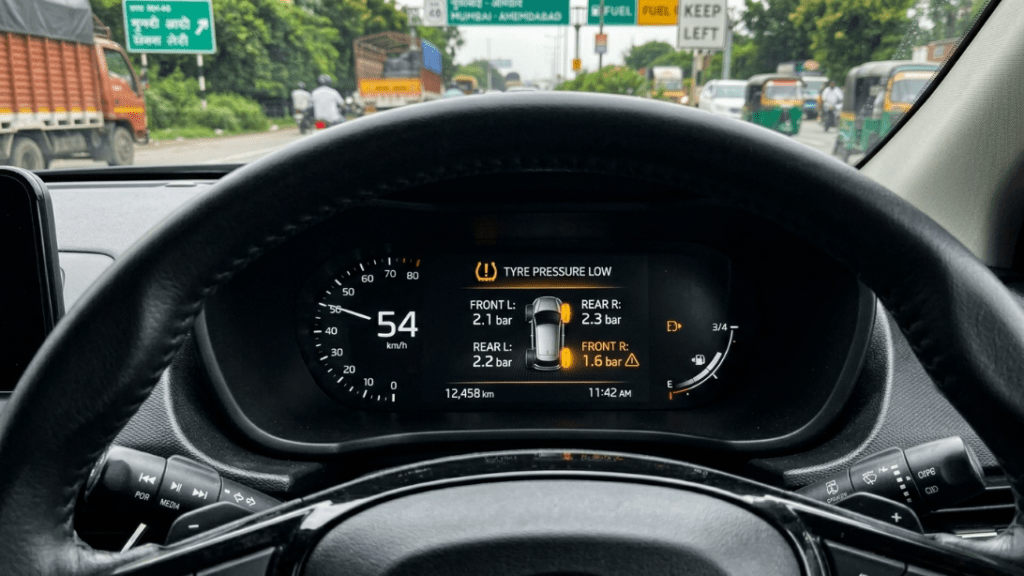
Sensors inside each wheel (or calculated through ABS data) monitor tyre pressure in real time. The information displays on your instrument cluster — usually as a small tyre icon with pressure readings for each wheel.
When pressure drops significantly, a warning light appears — typically an exclamation mark inside a horseshoe shape.
The hidden function: In most modern Indian cars, TPMS also monitors tyre temperature — because pressure changes with temperature. This means the system can predict potential blowouts before they happen.
C. Why Most Owners Never Use It
Because they don’t understand what the warning light means.
A 2023 survey revealed that 40% of Indian car owners who saw a TPMS warning light ignored it — assuming it was an electrical glitch. Some owners reset the warning without checking actual pressure. Others have no idea what the horseshoe symbol represents.
Sales executives often skip TPMS explanation entirely, focusing on more “exciting” features.
Additionally, many owners don’t know that TPMS needs recalibration after tyre rotation, replacement, or seasonal pressure adjustments. This calibration is usually accessible through the infotainment system’s settings menu.
D. Why It’s Actually Useful
Under-inflated tyres are a silent killer on Indian roads:
- They increase braking distance by up to 20%
- They reduce fuel efficiency by 3-5%
- They cause uneven wear, shortening tyre life significantly
- They overheat faster, increasing blowout risk on hot Indian highways
- They compromise handling during emergency maneuvers
Properly maintained tyre pressure saves the average Indian car owner ₹5,000-8,000 annually in fuel costs and tyre replacement expenses.
During Indian summers, when road surface temperatures exceed 60°C, tyre pressure management becomes critical. TPMS gives you real-time data to make informed decisions.
Additionally, TPMS alerts you to slow punctures — the gradual pressure loss that you might not notice for days. Catching a slow puncture early means getting it repaired instead of discovering a flat tyre at 6 AM on a deserted highway.
E. Cars That Offer This Feature
- Hyundai Verna, Creta, Tucson, Alcazar
- Kia Seltos, Sonet, Carens
- Tata Nexon, Harrier, Safari, Curvv
- Mahindra XUV700, XUV 3XO, Scorpio-N
- Honda City, Elevate
- Skoda Slavia, Kushaq
- Volkswagen Virtus, Taigun
- Toyota Camry, Fortuner
- Maruti Suzuki Grand Vitara (top variants)
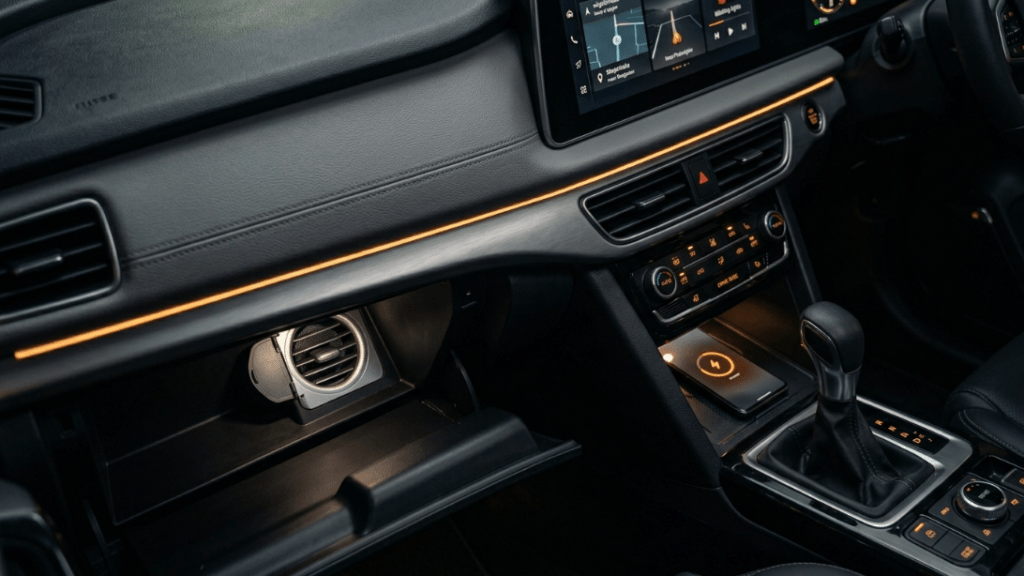
6. Cooled Glove Box — Your Secret Summer Refrigerator
A. What Is This Feature?
Many Indian cars have an air-conditioned glove box — a small vent inside the glove compartment that channels cool air from the AC system to keep contents chilled.
B. How It Works
Open your glove box. Look for a small flap or vent inside. Open that flap. Cool air from your car’s AC now flows directly into the glove compartment.
Place a water bottle, chocolate bar, or cold drink inside. Within 15-20 minutes of driving with AC on, your items are refreshingly chilled.
C. Why Most Owners Never Use It
Because the vent flap is almost always closed by default — and owners never notice it. It’s usually a small, inconspicuous opening on the back wall of the glove box.
Sales executives almost never mention this feature. It’s not glamorous enough for a sales pitch. “Sir, panoramic sunroof hai, ADAS hai, ventilated seats hain…” — nobody follows that with “…and your glove box is a mini-fridge.”
Many owners drive for years without ever opening that tiny flap.
D. Why It’s Actually Useful
Indian summers. Temperature outside: 44°C. You’re driving from Noida to Gurgaon. You bought a cold water bottle at a petrol pump 20 minutes ago. It’s already warm.
Without cooled glove box: You drink warm water and regret your life choices.
With cooled glove box: You open the glove box, grab an ice-cold bottle, and feel like a genius who has life figured out.
Beyond water bottles: Medications that need to stay cool. Chocolate that would otherwise melt into a sad puddle. Energy drinks. Baby food containers during family trips. Fruit juices for kids on long drives.
This feature turns your everyday commute into a slightly more civilized experience.
E. Cars That Offer This Feature
- Hyundai Venue, Creta, Verna, Alcazar, Tucson
- Kia Sonet, Seltos, Carens
- Tata Nexon, Harrier, Safari
- Mahindra XUV 3XO, XUV700, Scorpio-N
- Honda City, Elevate
- Maruti Suzuki Baleno, Fronx, Grand Vitara
- Toyota Urban Cruiser Hyryder
- Skoda Slavia, Kushaq
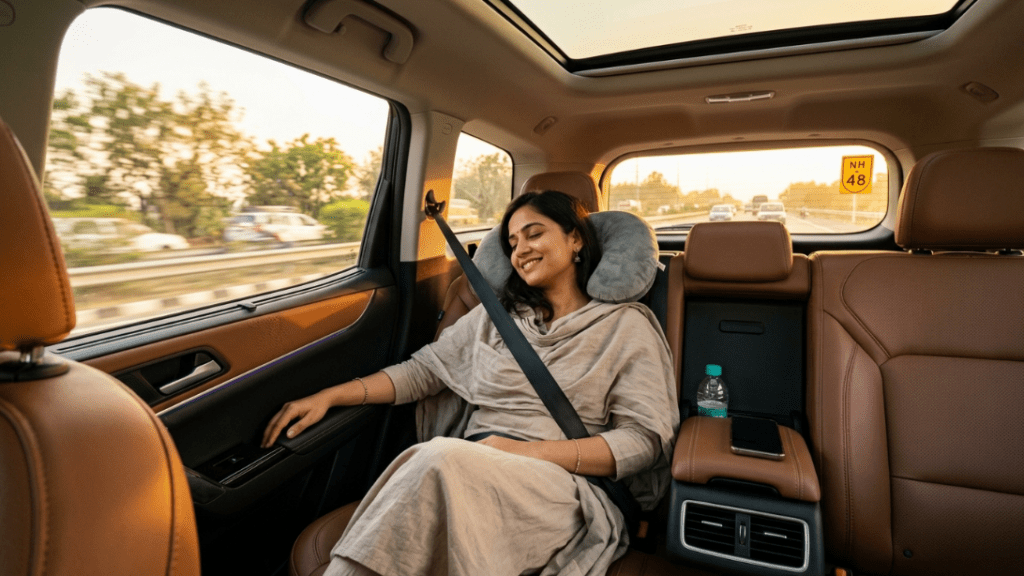
7. Adjustable Rear Seat Recline — The Family Comfort Secret
A. What Is This Feature?
Many SUVs and sedans in India offer adjustable rear seat backrest angles — allowing rear passengers to recline their seats for improved comfort during long drives.
B. How It Works
Look at the top of your rear seat backrest, near the shoulder area. There’s usually a small lever or button. Pull or press it, and the backrest tilts backward — typically offering 2-3 recline positions.
The difference between the most upright and most reclined position may seem small — just a few degrees. But on a 6-hour highway drive, those few degrees transform the rear seat experience from tolerable to genuinely comfortable.
C. Why Most Owners Never Use It
Because nobody physically demonstrates rear seat recline during test drives or delivery. The mechanism is subtle. Most rear passengers assume the backrest is fixed — especially if they’re used to older cars where this feature didn’t exist.
The lever or button is often hidden behind the headrest area, invisible unless you specifically look for it.
D. Why It’s Actually Useful
Indian families travel extensively by car. Weekend trips to Lonavala. Festival drives to native towns. Summer vacations to hill stations. Weddings in different cities.
During these 4-8 hour drives, rear seat comfort becomes critical — especially for elderly parents, pregnant women, or children who might need to nap.
A slightly reclined position:
- Reduces lower back pressure
- Makes sleeping easier for kids and elderly passengers
- Distributes body weight more evenly
- Reduces fatigue on long journeys
- Makes the car feel more expensive than it is
Pro tip: Combine rear seat recline with the rear armrest (if available) for maximum long-drive comfort. Your passengers will thank you at every toll plaza.
E. Cars That Offer This Feature
- Hyundai Creta, Alcazar, Tucson
- Kia Seltos, Carens
- Tata Harrier, Safari
- Mahindra XUV700, Scorpio-N
- Honda Elevate
- Toyota Fortuner, Innova Hycross
- Maruti Suzuki Grand Vitara
- MG Hector, Gloster
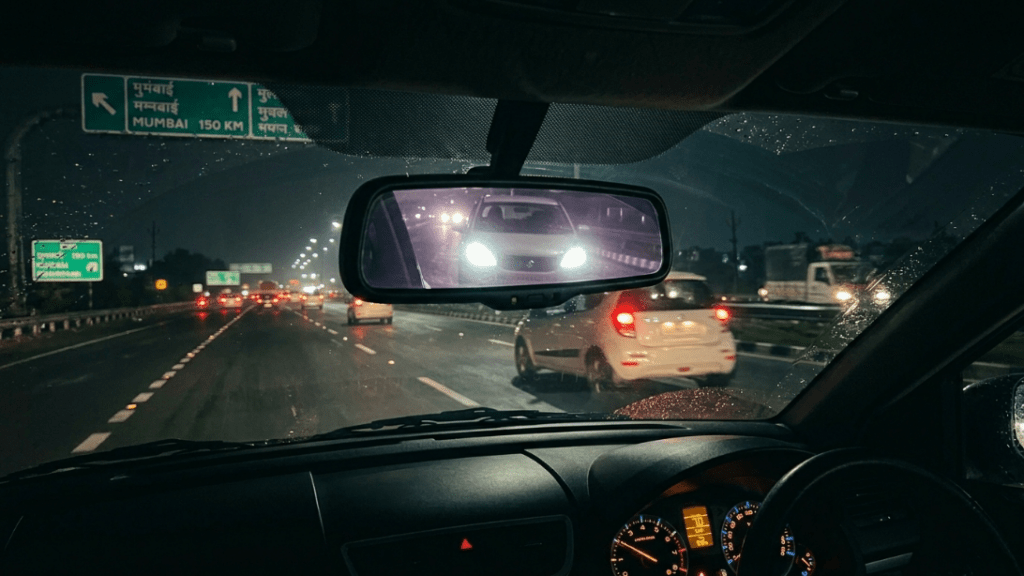
8. Auto-Dimming IRVM — The Night Driving Eye Saver
A. What Is This Feature?
Your Interior Rear View Mirror (IRVM) — the one hanging from the windshield — can automatically dim when bright headlights from vehicles behind you hit it at night. This prevents the blinding glare that makes night driving uncomfortable and dangerous.
B. How It Works
The auto-dimming IRVM has sensors that detect ambient light levels and the intensity of light hitting the mirror’s surface. When headlights from behind are detected, the mirror darkens automatically — reducing glare by up to 75%.
When the bright vehicle passes or turns away, the mirror returns to its normal clear state. The transition happens smoothly and continuously.
There’s usually no button to press. The feature works automatically — which is both its greatest strength and the reason most owners don’t know it exists.
C. Why Most Owners Never Use It
Because they assume all IRVMs are the same. Most Indian car owners have driven cars with basic manual day/night IRVMs for decades. The concept of an automatically adjusting mirror doesn’t even enter their awareness.
Some owners notice the mirror darkening at night but assume it’s a malfunction or an optical illusion. They don’t realize it’s intentionally protecting their eyes.
Auto-dimming IRVMs are typically found in mid-to-top variants, so base variant buyers might not experience them at all.
D. Why It’s Actually Useful
Indian night driving is uniquely challenging:
- High-beam culture: A significant percentage of Indian drivers use high beams constantly, including in city traffic
- Unpolarized aftermarket lights: Blinding LED and HID lights from modified vehicles
- Unlit highway sections where oncoming headlights cause maximum glare
Continuous exposure to bright reflections causes eye strain, headaches, and slower reaction times. Auto-dimming IRVMs significantly reduce this strain.
On Indian highways — especially two-lane roads where oncoming traffic shares close proximity — this feature is a genuine safety enhancement. You maintain clear forward visibility while staying aware of traffic behind you.
It’s one of those features that, once experienced, you can never go back to living without.
E. Cars That Offer This Feature
- Hyundai Creta, Verna, Tucson, Alcazar
- Kia Seltos, Carens
- Tata Harrier, Safari, Curvv
- Mahindra XUV700, Scorpio-N
- Honda City, Elevate
- Toyota Camry, Fortuner
- Skoda Slavia, Kushaq
- Volkswagen Virtus, Taigun
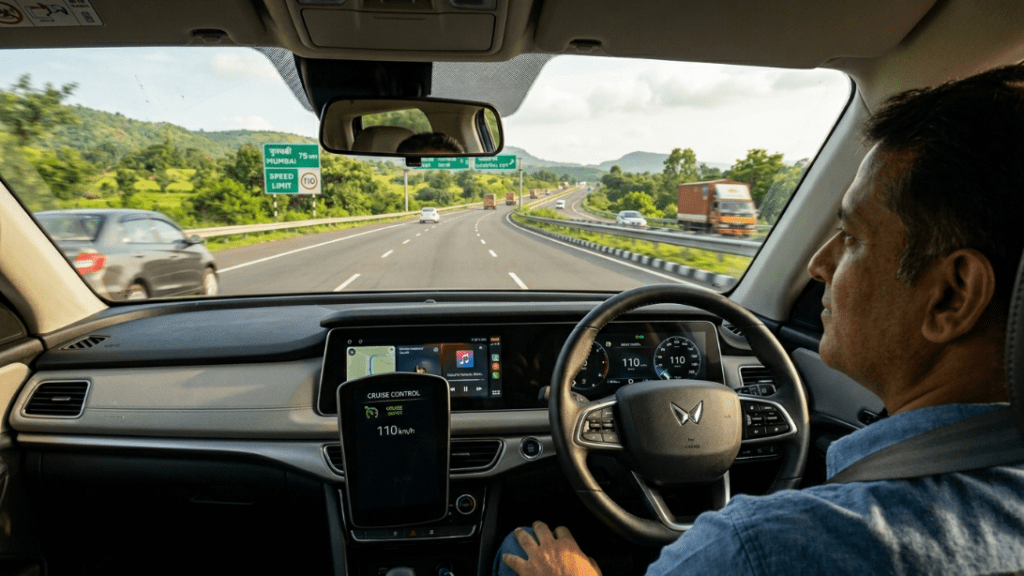
9. Hill Hold Assist — The Uphill Hero You’ve Been Ignoring
A. What Is This Feature?
Hill Hold Assist prevents your car from rolling backward when you’re stopped on an incline — like hill station roads, flyover ramps, or multilevel parking structures — and transition from brake to accelerator.
B. How It Works
You’re stopped on a steep incline in Shimla. Your foot is on the brake. You need to move to the accelerator to drive forward.
In a car without Hill Hold: The moment you release the brake, the car rolls backward. Panic. Quick foot movement. Stall. More panic. Honking from behind. Embarrassment.
In a car with Hill Hold: The system holds the brakes for approximately 2-3 seconds after you release the brake pedal. This gives you time to smoothly move your foot to the accelerator without any backward roll.
The transition from stopped to moving becomes smooth, confident, and stress-free.
C. Why Most Owners Never Use It
Hill Hold activates automatically — there’s typically no button or setting. Most owners don’t realize it exists until they’re in a situation where it activates. Even then, they attribute the smooth uphill start to their own driving skill.
Manual transmission drivers are more likely to notice this feature — because the backward roll on inclines is more dramatic in manual cars. Automatic transmission drivers often don’t realize Hill Hold is even working because the automatic gearbox already handles some of this functionality.
D. Why It’s Actually Useful
India has millions of incline-driving situations:
- Hill stations: Shimla, Manali, Ooty, Darjeeling, Munnar — every weekend destination involves steep inclines
- Multilevel parking: Mall and office parking structures with steep ramps
- Flyover ramps in cities like Pune, Bangalore, and Mumbai
- Underground parking with steep entry and exit angles
- Highway flyovers where you stop at signals on inclines
For manual transmission drivers, Hill Hold is transformative. The fear of stalling on a hill — especially with impatient traffic behind — disappears completely. You can focus on driving rather than managing the panic of roll-back.
For new drivers or less experienced family members who occasionally drive, Hill Hold provides enormous confidence on inclines that would otherwise cause anxiety.
E. Cars That Offer This Feature
- Almost all modern Indian cars with ESC offer Hill Hold Assist
- Standout implementations: Hyundai Creta, Mahindra XUV700, Tata Harrier, Kia Seltos, Skoda Slavia
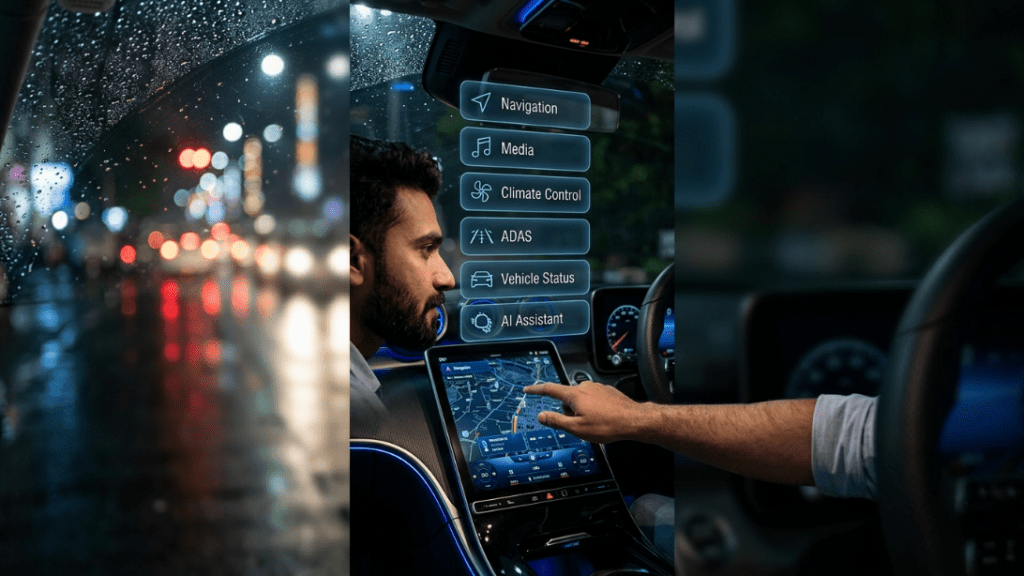
10. Wireless Android Auto & Apple CarPlay Hidden Functions
A. What Is This Feature?
You probably know you can connect your phone wirelessly to your car’s infotainment system. But within Android Auto and Apple CarPlay, there are layers of functionality that most Indian owners never explore.
B. Hidden Functions Most Owners Miss
Voice Commands: Say “Hey Google, navigate to the nearest petrol pump” or “Hey Siri, play my driving playlist” — without touching any screen. This works through your car’s microphone and speakers.
Message Reading and Reply: Android Auto and CarPlay can read incoming WhatsApp messages aloud and let you dictate replies — completely hands-free. This eliminates the dangerous habit of checking phones while driving.
Multiple Navigation Apps: Most owners use only Google Maps. But Android Auto supports Waze (better for real-time traffic alerts and speed camera warnings). Apple CarPlay supports Apple Maps, Google Maps, and Waze simultaneously.
Split Screen Mode: Recent versions support split-screen display — showing navigation and music controls simultaneously on the infotainment screen.
Calendar Integration: Your phone’s calendar events automatically appear, with one-tap navigation to your next meeting location.
Fuel Price Comparison: Google Maps through Android Auto shows fuel prices at nearby petrol pumps — helping you find the cheapest option during road trips.
C. Why Most Owners Never Use It
Most owners connect their phone, open Spotify, and stop exploring. The deeper features require knowing specific voice commands or navigating through settings menus.
Language barriers also play a role. While Hindi and regional language support has improved, many advanced commands work best in English — which limits accessibility for some Indian users.
Additionally, wireless connectivity issues (lag, disconnections, audio delay) frustrate many owners into giving up on the wireless mode entirely and reverting to USB cables.
D. Why It’s Actually Useful
Hands-free messaging is a genuine safety feature in Indian traffic conditions where phone distraction causes accidents daily.
Voice-controlled navigation means you don’t need to type addresses while driving — a particularly dangerous practice on Indian roads with unpredictable traffic patterns.
Fuel price comparison saves real money during highway road trips. Finding petrol at ₹2-3 less per liter over 40-50 liters adds up over multiple trips.
Calendar integration transforms your car into a mobile office extension — especially valuable for working professionals driving between meetings in Indian metros.
E. Cars That Offer Wireless Connectivity
- Hyundai Verna, Creta, Venue, Alcazar
- Kia Seltos, Sonet, Carens
- Tata Nexon, Harrier, Safari, Curvv
- Mahindra XUV700, XUV 3XO, Scorpio-N
- Honda City, Elevate
- Toyota Urban Cruiser Hyryder
- Skoda Slavia, Kushaq
- Volkswagen Virtus, Taigun
- Maruti Suzuki Fronx, Grand Vitara
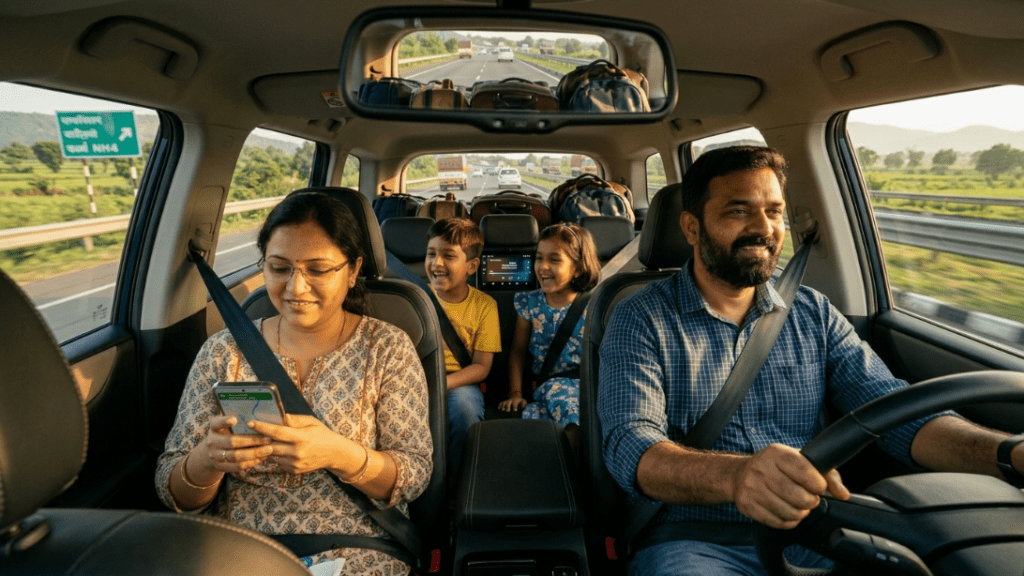
11. ADAS Features Most Indian Drivers Ignore
A. What Is This Feature?
ADAS (Advanced Driver Assistance Systems) represents the most sophisticated technology available in Indian cars today. Yet most owners treat ADAS as a spec-sheet feature rather than a daily driving tool.
B. Hidden ADAS Functions Worth Using
Adaptive Cruise Control (ACC): Set your speed, and the car automatically maintains distance from the vehicle ahead. When traffic slows, your car slows. When traffic clears, your car returns to set speed. On Indian expressways, this is transformative.
Lane Keep Assist (LKA): Gentle steering corrections prevent unintentional lane departure. This isn’t autonomous driving — it’s a safety net for momentary distractions.
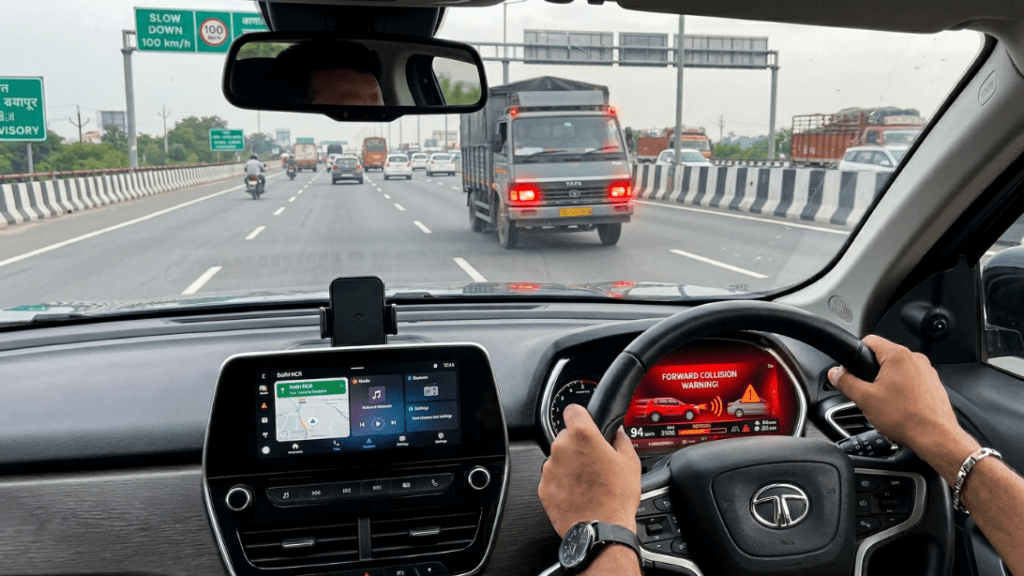
Forward Collision Warning (FCW): Visual and audible alerts when approaching a vehicle or obstacle too quickly. The system warns you before you realize the danger yourself.
Blind Spot Monitoring (BSM): Warning indicators in your side mirrors alert you to vehicles in your blind spot — crucial during lane changes on Indian highways.
Rear Cross Traffic Alert: When reversing out of parking spaces, the system warns you of approaching vehicles from the sides — incredibly useful in crowded Indian mall parking lots.
C. Why Most Owners Never Use It
Fear. Many Indian owners are afraid of ADAS. They worry the car will “take over” or make unwanted interventions. They switch ADAS off immediately after delivery and never explore it.
Some owners had bad initial experiences — like Lane Keep Assist activating on narrow Indian roads where lane markings are inconsistent. One bad experience convinced them the technology is broken.
Others simply don’t understand the difference between ADAS features and assume it’s all or nothing. They don’t realize each ADAS function can be individually adjusted or disabled.
D. Why It’s Actually Useful
ADAS has prevented accidents on Indian roads. Forward Collision Warning gives you an extra 1-2 seconds of reaction time — which at highway speeds can mean the difference between a safe stop and a collision.
Adaptive Cruise Control reduces driver fatigue on long highway drives by 30-40%. For Indian professionals who regularly drive Pune-Mumbai, Delhi-Agra, or Bangalore-Mysore routes, this is a quality-of-life upgrade.
Blind Spot Monitoring eliminates one of India’s most common accident scenarios — lane changes into unseen vehicles.
Pro tip: Start with Forward Collision Warning and Blind Spot Monitoring. These features rarely cause unwanted interventions and provide genuine safety benefits. Gradually explore Adaptive Cruise Control on empty expressways before using it in traffic.
E. Cars That Offer ADAS
- Hyundai Verna (Level 2), Creta (Level 1), Tucson (Level 2)
- Kia Seltos (Level 1), EV6 (Level 2)
- Tata Harrier, Safari (Level 2), Curvv (Level 2)
- Mahindra XUV700 (Level 1+), XUV 3XO (Level 2)
- Honda Elevate (Honda Sensing)
- Toyota Urban Cruiser Hyryder (select variants)
- MG Astor (Level 2)
- BYD Atto 3
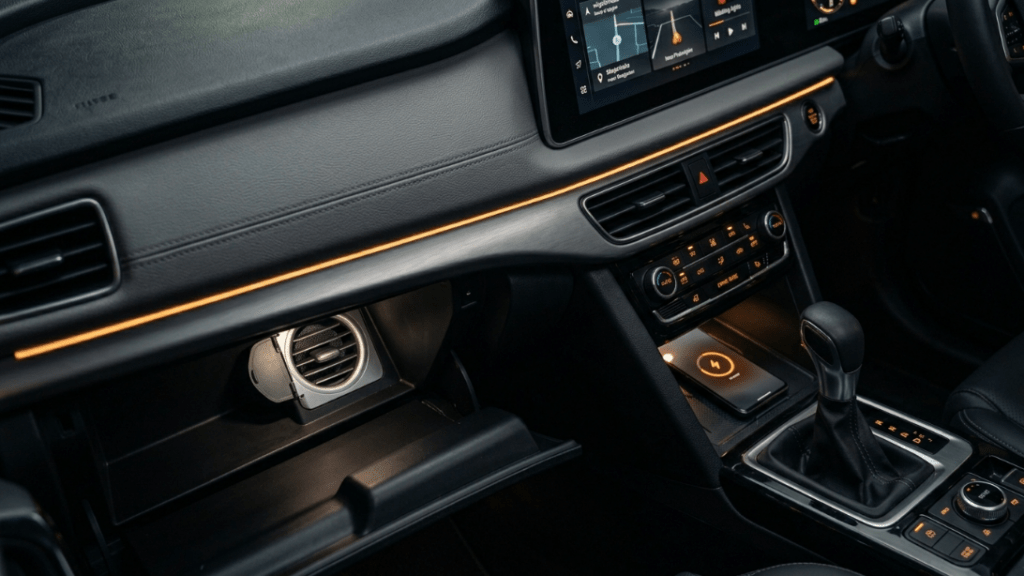
12. Hidden Storage Compartments — The Secret Spaces
A. What Is This Feature?
Modern Indian cars are designed with hidden storage compartments that most owners never discover. These aren’t the obvious glove box or door pockets — they’re secret spaces engineered into unexpected places.
B. Where They Hide
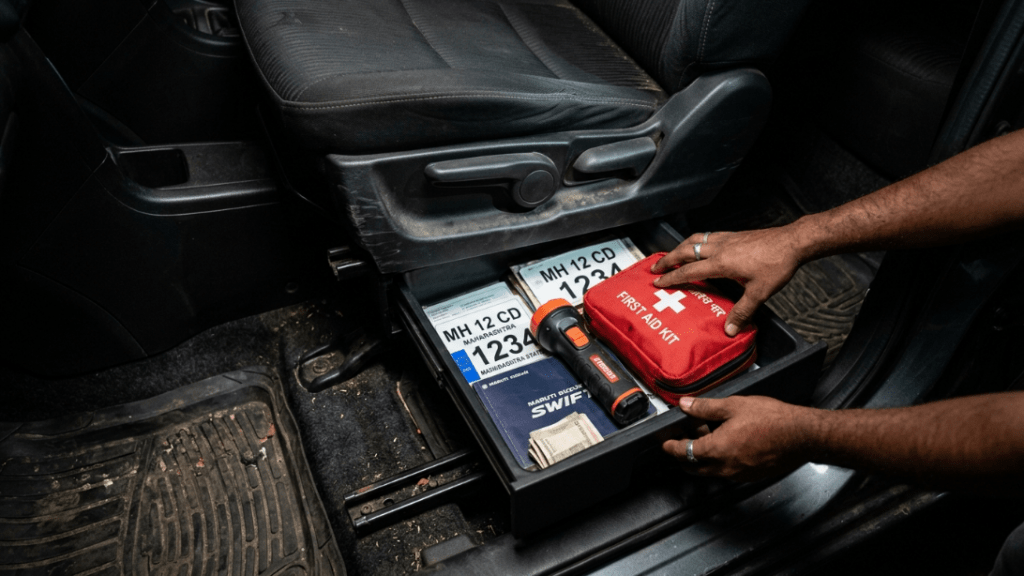
Under the front passenger seat: Many cars have a pull-out drawer or under-seat storage tray — perfect for storing emergency tools, first-aid kits, or important documents you want hidden from view.
Behind the infotainment screen: Some cars with floating infotainment designs have hidden space behind the screen — ideal for placing a phone on charge while keeping it concealed.
Floor console hidden compartment: Underneath the center armrest, some cars have secondary storage layers — a lower compartment that’s invisible unless you specifically look for it.
Boot floor hidden compartment: Beneath the boot floor, above the spare tyre, there’s usually a flat storage area perfect for valuables, tools, or emergency supplies.
Seatback pockets (hidden zippers): Some car seatback organizers have zippered sections that most passengers never open — hiding useful items from plain view.
Sunglass holder (roof-mounted): That small compartment above your head near the interior lights? It’s designed for sunglasses — but many owners use it to store random items without realizing its intended purpose.
C. Why Most Owners Never Use It
Because they’re hidden. That’s literally the point. These compartments exist for security, organization, and space optimization — but they require deliberate discovery.
Owner’s manuals mention them, but let’s be honest — how many Indian car owners read the complete owner’s manual?
D. Why It’s Actually Useful
Indian car security concerns make hidden storage valuable. Parking your car in public areas — especially in unfamiliar cities — means visible valuables attract unwanted attention.
Documents hidden under the seat stay safe. A phone charging behind the screen stays concealed. Emergency cash in the boot compartment remains accessible but invisible.
Organization-wise, hidden compartments prevent the glove box from becoming a chaotic drawer of random papers, old receipts, and forgotten documents.
E. Cars That Offer Hidden Storage
- Mahindra XUV700 (under-seat storage, boot compartment)
- Hyundai Tucson (under-floor boot storage)
- Tata Safari (boot hidden compartment)
- Kia Carens (seatback storage, under-floor boot)
- Toyota Innova Hycross (multiple hidden compartments)
- MG Hector (under-seat storage)
13. Emergency Brake Flashing — The Invisible Safety Net
A. What Is This Feature?
When you brake hard at high speeds, your car automatically activates hazard lights (all four indicators flashing rapidly) to warn vehicles behind you of an emergency stop.
B. How It Works
You’re driving at 100 km/h on the expressway. A vehicle ahead stops suddenly. You slam the brakes hard. The car decelerates rapidly.
Simultaneously, the car’s computer detects emergency braking and activates hazard lights automatically. The rapid flashing alerts drivers behind you that you’re decelerating faster than normal — giving them critical extra seconds to react.
C. Why Most Owners Never Use It
Because it’s automatic and invisible. There’s no button to press. No setting to enable. It activates only during genuine emergency braking situations.
Most owners never experience emergency braking hard enough to trigger this system — and when they do, they’re focused on the road ahead, not their indicator lights.
D. Why It’s Actually Useful
Indian highways have a serious chain-reaction accident problem. When one car emergency-stops, the vehicle behind often doesn’t react fast enough — especially if they’re following too closely (which, let’s be honest, is the norm on Indian roads).
Rapidly flashing hazard lights are processed faster by the human brain than normal brake lights. They communicate urgency. They say “STOP NOW” in a language that transcends conscious processing.
This simple feature can prevent multi-vehicle pileups — especially on expressways and highways where speeds are high and following distances are dangerously short.
E. Cars That Offer This Feature
- Skoda Slavia, Kushaq
- Volkswagen Virtus, Taigun
- Hyundai Verna, Tucson
- Kia Seltos, EV6
- Tata Harrier, Safari, Curvv
- Mahindra XUV700, Scorpio-N
- Honda City, Elevate
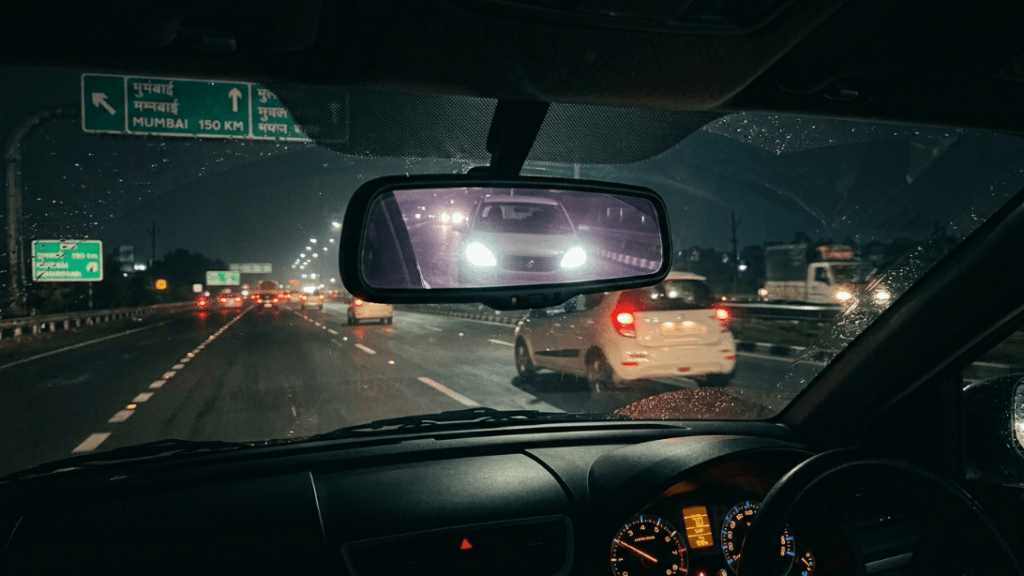
14. One-Touch Lane Change Indicators — The Subtle Safety Upgrade
A. What Is This Feature?
When you gently tap the indicator stalk (without fully engaging it), the indicators flash exactly 3 times — enough for a quick lane change on highways. This eliminates the need to fully engage and then disengage indicators for brief lane changes.
B. How It Works
You’re on a three-lane highway. You want to move one lane to the right. Instead of pushing the indicator stalk fully (which keeps indicators flashing until you manually cancel), you give it a gentle tap.
Three flashes. Lane change complete. Indicators automatically stop. Clean, efficient, and professional.
C. Why Most Owners Never Use It
The tap sensitivity is different from full engagement. Many owners don’t realize there’s a halfway position on the indicator stalk. They either push fully or don’t push at all.
In older Indian cars, this feature didn’t exist. So owners who upgraded from older vehicles carry the habit of full indicator engagement.
D. Why It’s Actually Useful
Indian highway lane changes happen frequently. Overtaking trucks, merging into expressway lanes, navigating toll plaza approaches — brief indicator flashes communicate your intention clearly without the unnecessary drama of continuously flashing indicators.
Using indicators properly — even briefly — dramatically reduces accident risk. The three-flash system makes proper signaling effortless.
It also looks more professional — something that matters when you’re driving clients, colleagues, or in-laws.
E. Cars That Offer This Feature
- Almost all modern Indian cars (2020 onwards)
- Standard in: All Hyundai, Kia, Tata, Mahindra, Skoda, Volkswagen models
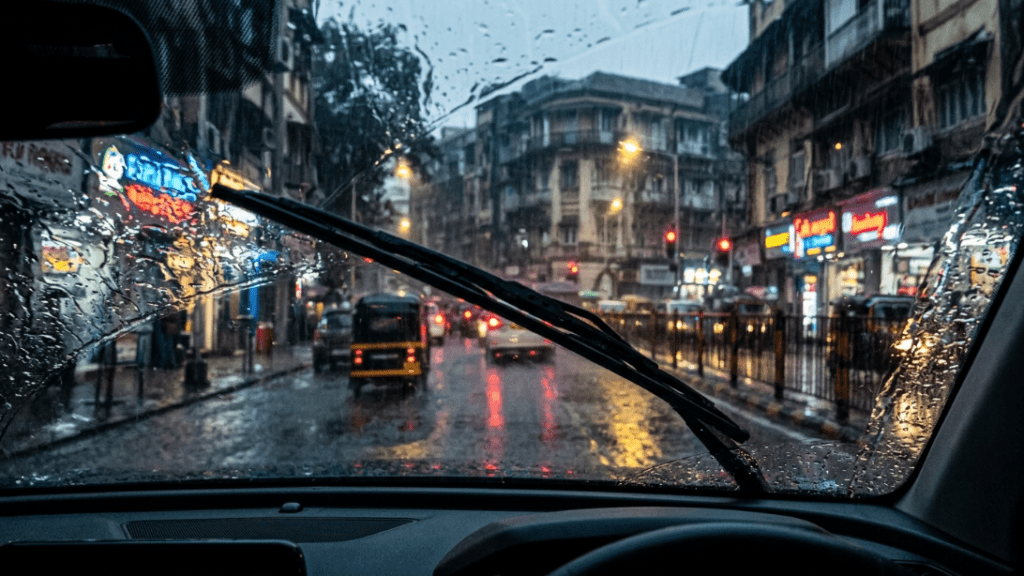
15. Rain-Sensing Wipers — The Monsoon Magic You’re Not Appreciating
A. What Is This Feature?
Rain-sensing wipers automatically detect water on your windshield and activate — adjusting their speed based on rainfall intensity. You never need to manually operate wiper controls during rain.
B. How It Works
An infrared sensor near the rearview mirror detects water droplets on the windshield. Light rain? Slow, intermittent wipes. Heavy downpour? Fast, continuous wiping. Drizzle that stops and starts? The wipers activate and deactivate automatically.
The sensitivity is usually adjustable through a dial on the wiper stalk — allowing you to set how quickly the system responds to moisture.
C. Why Most Owners Never Use It
Most owners use the wipers manually because they don’t realize automatic mode exists. The feature needs to be activated — usually by moving the wiper stalk to a specific position with a “AUTO” setting.
Some owners tried it once, found the sensitivity wrong, and reverted to manual mode — not realizing the sensitivity is adjustable.
D. Why It’s Actually Useful
Indian monsoon driving demands constant wiper adjustment. From drizzle to torrential downpour to spray from trucks to sudden stops — the manual wiper approach is distracting and inefficient.
Rain-sensing wipers free your hands and attention for the road. They respond faster than manual adjustment. During sudden monsoon bursts — common on Indian highways — the wipers react instantly while your hands stay firmly on the steering wheel.
This is not a luxury feature. It’s a safety feature that reduces distraction during the most challenging driving conditions.
E. Cars That Offer This Feature
- Hyundai Creta, Verna, Tucson, Alcazar
- Kia Seltos, Carens
- Tata Harrier, Safari, Curvv
- Mahindra XUV700, XUV 3XO, Scorpio-N
- Honda City, Elevate
- Skoda Slavia, Kushaq
- Volkswagen Virtus, Taigun
- Toyota Camry, Fortuner
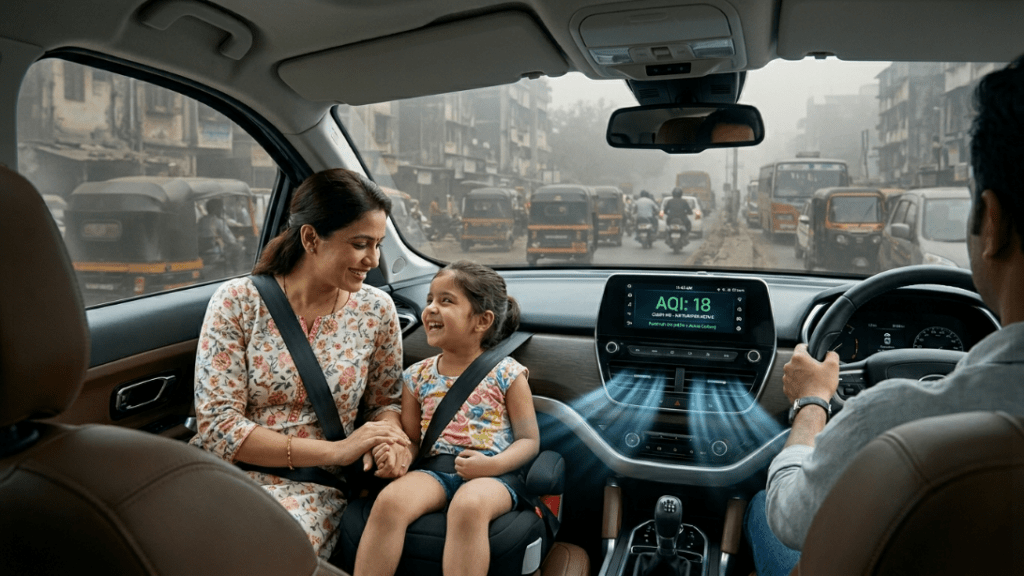
16. Air Purifier with AQI Display — Breathing Clean Air on Indian Roads
A. What Is This Feature?
Many premium Indian cars now include built-in air purifiers that filter cabin air and display real-time Air Quality Index (AQI) readings on the infotainment screen.
B. How It Works
The system continuously monitors cabin air quality using internal sensors. When pollution levels rise — during traffic jams, construction zones, or high-pollution areas — the purifier automatically activates, filtering PM2.5 particles, allergens, and odors.
The AQI display shows numerical readings (usually on a 0-500 scale) — allowing you to see exactly how clean or polluted the air inside your car is.
C. Why Most Owners Never Use It
Because they don’t know it’s working. In many cars, the air purifier activates automatically — so owners breathe clean air without realizing a system is actively cleaning it.
The AQI display is often buried in the infotainment menu — requiring specific navigation to find it. Most owners never look for it.
D. Why It’s Actually Useful
Indian cities have some of the world’s worst air quality. Delhi’s winter AQI regularly exceeds 400. Even “cleaner” cities like Bangalore and Hyderabad have pockets of severe pollution.
During traffic jams — where your car sits in a cloud of exhaust fumes — the air purifier creates a clean bubble inside your cabin. Children, elderly family members, and asthma patients benefit enormously.
The AQI display also serves as reality check. Seeing that the air inside your car is clean (AQI 30-50) while the air outside is hazardous (AQI 300+) reinforces the value of keeping windows closed and the purifier running.
For families with young children or respiratory patients, this feature alone justifies choosing a top variant.
E. Cars That Offer This Feature
- Hyundai Creta, Verna, Tucson
- Kia Seltos, Carens
- Tata Harrier, Safari, Curvv
- Mahindra XUV700, XUV 3XO
- MG Hector, Astor
- Honda Elevate (select variants)
17. Steering Modes — Unlocking Different Driving Personalities
A. What Is This Feature?
Many modern Indian cars offer adjustable steering weight/feel modes — typically selectable as Comfort, Normal, and Sport. These modes change how heavy or light the steering feels.
B. How It Works
Comfort Mode: Light, easy steering. Perfect for city driving, parking, and navigating narrow Indian gullies. Minimal effort required.
Normal Mode: Balanced steering weight. Suitable for mixed driving conditions — city and highway combined.
Sport Mode: Heavy, responsive steering. More feedback, more precision, more engagement. Ideal for highway cruising and spirited driving.
Selection is usually through a button on the center console or within the infotainment drive mode settings.
C. Why Most Owners Never Use It
They don’t know it exists. Steering modes are less advertised than drive modes (Eco/Sport/Snow). Many owners assume drive modes change everything — engine, gearbox, and steering — when actually steering weight may be independently adjustable.
D. Why It’s Actually Useful
Indian driving requires versatility. Morning traffic in Bangalore demands light steering. Afternoon highway cruising on NH48 demands stability. Evening parking in a crowded market demands effortless maneuverability.
Switching steering modes takes one second and transforms the car’s character to match the moment. It’s like having multiple cars in one.
E. Cars That Offer This Feature
- Hyundai Verna, Creta, Tucson
- Kia Seltos, EV6
- Tata Harrier, Safari
- Mahindra XUV700
- Skoda Slavia, Kushaq
- Volkswagen Virtus, Taigun
Top 5 Hidden Features Every Indian Driver Should Start Using Today
After analyzing all the features above, here are the five that will make the biggest immediate difference in your daily driving:
1. Auto Window Roll-Up with Key Fob
Why: You’ll use this within the first week of knowing about it. Guaranteed. Rain protection, security, convenience — this feature solves problems you face regularly.
2. Follow Me Home Headlamps
Why: Dark parking areas are an Indian reality. This feature turns every arrival into a well-lit, safe experience. One push of the indicator stalk. That’s all it takes.
3. Cruise Control with Resume Function
Why: If you drive on highways even once a month, this will transform your experience. Reduced fatigue. Better mileage. Safer driving. And the Resume button makes it truly effortless.
4. ADAS Forward Collision Warning
Why: Even if you’re skeptical about ADAS, start with just this one feature. It warns you before you realize you’re in danger. That extra second of awareness can prevent accidents.
5. Air Purifier with AQI Display
Why: Indian air quality is a genuine health concern. Knowing your cabin air is clean — and having the data to prove it — brings peace of mind that’s especially valuable for families with children.
Myth vs Reality: Common Misconceptions About Hidden Car Features
Myth 1: “Cruise control is only for expressways.”
Reality: Adaptive Cruise Control works perfectly in moderate highway traffic — automatically maintaining distance from vehicles ahead. It’s not just for empty roads. Modern systems handle 40-60 km/h traffic with ease.
Myth 2: “ADAS drives the car automatically.”
Reality: ADAS assists — it doesn’t drive. Your hands must stay on the steering wheel. Your eyes must stay on the road. ADAS is a co-pilot, not an autopilot. Confusing these concepts is dangerous.
Myth 3: “ESC is only useful in rain.”
Reality: ESC activates during any loss of traction — including emergency lane changes, sudden obstacle avoidance, and uneven road surfaces. It works in dry conditions too. Never switch it off.
Myth 4: “Air purifiers use too much fuel/battery.”
Reality: Car air purifiers consume negligible power — equivalent to running a small USB fan. The fuel/energy impact is virtually zero. Keep it running in Indian traffic conditions.
Myth 5: “Follow Me Home headlamps drain the battery.”
Reality: The 30-120 second duration uses minimal battery power. Modern car batteries handle this easily. You could use this feature daily for years without any battery impact.
Myth 6: “Rain-sensing wipers don’t work properly.”
Reality: They work excellently when sensitivity is properly calibrated. The sensitivity dial on the wiper stalk allows customization. Most complaints come from owners who never adjusted the sensitivity setting.
Myth 7: “TPMS readings aren’t accurate.”
Reality: Modern TPMS systems are accurate within ±1 PSI. That’s more precise than most manual pressure gauges at Indian petrol pumps. Trust your TPMS — it’s monitoring your tyres more reliably than you are.
Expert Tips: Getting the Most from Your Car’s Hidden Features
🔧 During Car Delivery
Request a complete feature walkthrough. Don’t accept a 10-minute demonstration. Insist on 30-45 minutes with the delivery executive. Ask specifically about:
- All steering wheel controls
- ADAS features and their settings
- Hidden storage locations
- Drive mode and steering mode options
- Key fob extended functions
- Infotainment system hidden menus
☀️ During Indian Summers
Activate cooled glove box for cold water during commutes. Use ventilated seats from the moment you enter the car — not after you start sweating. Pre-cool the car using connected car remote start (available in Hyundai, Kia, Tata, Mahindra). Keep windows closed and air purifier running during peak pollution hours.
🌧️ During Monsoons
Activate rain-sensing wipers and set appropriate sensitivity. Ensure ESC is ON before driving on wet roads. Use auto window roll-up to protect against sudden rain. Check TPMS before long drives — monsoon conditions make proper tyre pressure critical.
🛣️ During Highway Trips
Master cruise control with Resume function before your next long drive. Enable ADAS features gradually — start with Forward Collision Warning. Use steering Sport mode for highway driving. Activate Adaptive Cruise Control (if available) on expressways.
🏙️ During City Driving
Switch to Comfort steering mode for effortless parking. Keep Follow Me Home headlamps ready for evening/night parking. Use wireless Android Auto voice commands instead of touching your phone. Monitor AQI readings during heavy traffic and keep windows closed when readings are high.
Wheelinity Expert Verdict
Here’s our editorial position after deep-diving into hidden features across Indian cars:
The technology gap between what Indian cars offer and what Indian owners use is staggering — and it’s a gap that doesn’t need to exist.
Manufacturers have invested thousands of crores in equipping Indian cars with safety, comfort, and convenience features that genuinely improve daily driving. But the delivery experience — the moment when ownership officially begins — remains inadequate in most showrooms.
A 15-minute handover cannot cover 50+ intelligent features. And once that moment passes, most owners never return to explore what they missed.
Our recommendation: Spend one weekend evening with your car’s owner’s manual. Yes, it’s boring. Yes, it’s thick. But 60 minutes of reading will unlock features that transform your next 5-10 years of driving.
Alternatively, search YouTube for “[Your Car Model] hidden features” — Indian automotive creators have done an excellent job documenting features that sales executives miss.
Your car is smarter than you think. It’s time you met the full version.
Conclusion: The Intelligence You’ve Been Sitting On
Every morning, millions of Indian car owners start their engines and drive away — carrying technology that could make their commutes safer, their highway drives less exhausting, their family trips more comfortable, and their ownership experience genuinely richer.
And they use half of it. Maybe less.
The Follow Me Home headlamp that could guide them through dark parking lots — ignored because nobody mentioned it. The air purifier that could protect their children from toxic air — running silently, appreciated never. The ADAS system that could prevent an accident — switched off because of unfounded fear.
This isn’t a failure of the technology. It’s a failure of communication — between manufacturers and showrooms, between sales executives and buyers, between the car and the owner who never asked it to reveal its secrets.
Modern Indian cars are engineering marvels. A ₹12 lakh Hyundai Creta today has more computing power, more safety systems, and more intelligent features than a ₹50 lakh luxury car from just 15 years ago. That’s not hyperbole — that’s the rate of automotive evolution.
But technology without awareness is just hardware. Features without users are just spec sheet entries. The gap between what your car can do and what you ask it to do is the difference between driving and truly experiencing your vehicle.
Your car has been waiting patiently. In the dashboard menus. In the steering wheel buttons. In the key fob long-presses. In the indicator stalk taps. It’s been waiting for you to explore.
Today is a good day to start.
Open that owner’s manual. Press that mystery button. Explore that settings menu. Your car has been keeping secrets — beautiful, useful, potentially life-saving secrets.
It’s time you discovered every single one.
Frequently Asked Questions
Q1: What are the most commonly ignored hidden features in Indian cars?
A: The most commonly ignored features include Follow Me Home headlamps, auto window roll-up via key fob, cruise control Resume function, cooled glove box vent, adjustable rear seat recline, and ADAS features like Forward Collision Warning. Most owners don’t use these because sales executives rarely explain them during delivery, and owner’s manuals go unread.
Q2: How do I find hidden features in my car?
A: Start by reading your owner’s manual — focus on sections about steering wheel controls, key fob functions, infotainment settings, and safety systems. Search YouTube for “[Your Car Model] hidden features” for video demonstrations. Visit your dealership and request a detailed feature walkthrough. Explore every button, menu, and setting systematically.
Q3: Is ADAS safe to use on Indian roads?
A: Yes, with proper understanding. Start with Forward Collision Warning and Blind Spot Monitoring, which rarely cause unwanted interventions. Adaptive Cruise Control works well on expressways. Lane Keep Assist may struggle on roads with poor lane markings — so disable it in those conditions. ADAS assists but never replaces attentive driving.
Q4: Do hidden car features affect maintenance costs?
A: No. Hidden features like Follow Me Home headlamps, auto window roll-up, cooled glove box, and TPMS use existing car systems and don’t increase maintenance costs. ADAS sensors may need occasional calibration during service, but this is covered under standard service packages in most Indian cars.
Q5: Which Indian car brand offers the most hidden features?
A: Hyundai and Kia currently offer the most comprehensive feature packages in Indian cars, including advanced ADAS, connected car technology, and multiple hidden convenience features. Tata and Mahindra have significantly closed the gap with models like the Curvv, Harrier, XUV700, and XUV 3XO. Skoda and Volkswagen offer excellent driving-focused hidden features like steering modes and advanced cruise control systems.