
“Top 15 Car Safety Tips Every Driver Should Know in 2026”
Read This Before You Start Your Engine
Here’s a number that should stop you cold:
Every 4 minutes, someone dies on an Indian road.
That’s not a headline. That’s not a dramatized statistic. According to the Ministry of Road Transport and Highways (MoRTH), India recorded over 1.68 lakh road accident deaths in 2022 — making it one of the deadliest road networks on the planet.
And here’s the part that hurts even more:
Most of those deaths were preventable.
Think about the last time you glanced at your phone while driving. Or skipped checking your tire pressure because you were running late. Or drove 10 km after noticing your brakes felt slightly off — telling yourself you’d get it checked “this weekend.”
We’ve all done it.
But in 2026, with faster highways, heavier traffic, distracted drivers everywhere, and electric vehicles silently overtaking you on the left — the game has changed. The risks are bigger. The distractions are louder. And the margin for error is thinner than ever before.
This isn’t just another listicle of obvious tips. This is a real, expert-driven, life-first guide built for Indian drivers navigating everything from chaotic city intersections to lonely midnight highways.
In this guide, you’ll discover 15 life-saving car safety tips every driver must follow in 2026.
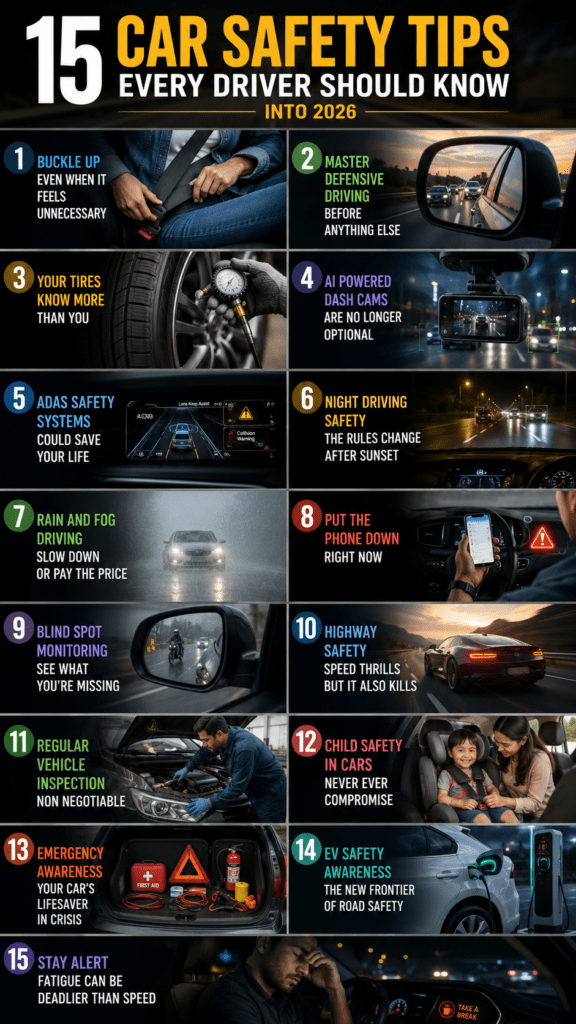
📋 Table of Contents
| # | Safety Tip |
|---|---|
| 1 | Buckle Up — Even When It Feels Unnecessary |
| 2 | Master Defensive Driving Before Anything Else |
| 3 | Your Tires Know More Than You Think |
| 4 | AI-Powered Dashcams Are No Longer Optional |
| 5 | ADAS Safety Systems: Let Your Car Help You |
| 6 | Night Driving Safety — The Rules Change After Sunset |
| 7 | Rain and Fog Driving: Slow Down or Pay the Price |
| 8 | Put the Phone Down. Right Now. |
| 9 | Blind-Spot Monitoring — See What You’re Missing |
| 10 | Highway Safety: Speed Thrills, But It Also Kills |
| 11 | Regular Vehicle Inspections Are Non-Negotiable |
| 12 | Child Safety in Cars — Never Compromise |
| 13 | Emergency Kit — Your Car’s Lifesaver in a Crisis |
| 14 | EV Safety Awareness — The New Frontier of Road Safety |
| 15 | Speed Management: The Smartest Skill You’ll Ever Learn |
TIP #1: Buckle Up — Even When It Feels Unnecessary
“I’m only going to the market.” Famous last words.
Why It Matters:
The seatbelt is the single most effective safety device ever installed in a vehicle. Full stop. According to global road safety data, wearing a seatbelt reduces the risk of death by up to 45% for front-seat passengers and 60% for rear-seat passengers.
Yet in India, rear-seat seatbelt compliance is horrifyingly low. Many passengers — and even drivers — still treat it as optional. Some skip it because “the trip is short.” Others because it’s uncomfortable. Some simply because no one ever made it a habit.
Common Mistakes Drivers Make:
- Not fastening the seatbelt for short distances
- Allowing rear passengers to ride unbuckled
- Wearing the belt across the abdomen instead of the chest (incorrect positioning)
- Letting children sit on laps instead of in proper car seats
Practical Solution:
Make it a non-negotiable ritual. Engine doesn’t start until every seatbelt is buckled. Set this rule in your car like a law — because technically in India, it is a law under the Motor Vehicles Act.
2026 Smart Driving Angle:
Modern 2026 vehicles come equipped with multi-point seatbelt reminders, pressure sensors, and even AI-based occupancy detection that alerts you if any passenger is unbuckled. If your car has it, enable it. If it doesn’t — upgrade your habits.
🔴 Pro Tip: Position the shoulder strap across the center of your chest, not your neck. The lap belt should sit snug across your hip bones — not your stomach. Incorrect positioning can cause internal injuries in a collision even with the belt on.
Real-World Example:
In 2023, a family traveling on the Yamuna Expressway in UP survived a high-speed collision. The front passengers survived. The two rear passengers who weren’t wearing seatbelts were thrown forward on impact. One didn’t make it.
Safety Benefits:
✅ Reduces ejection risk
✅ Protects against airbag injuries
✅ Legally required — avoids ₹1,000 fine under MV Act
✅ Sets example for children
You Can Also Check This
how to make your car 10+ years proven

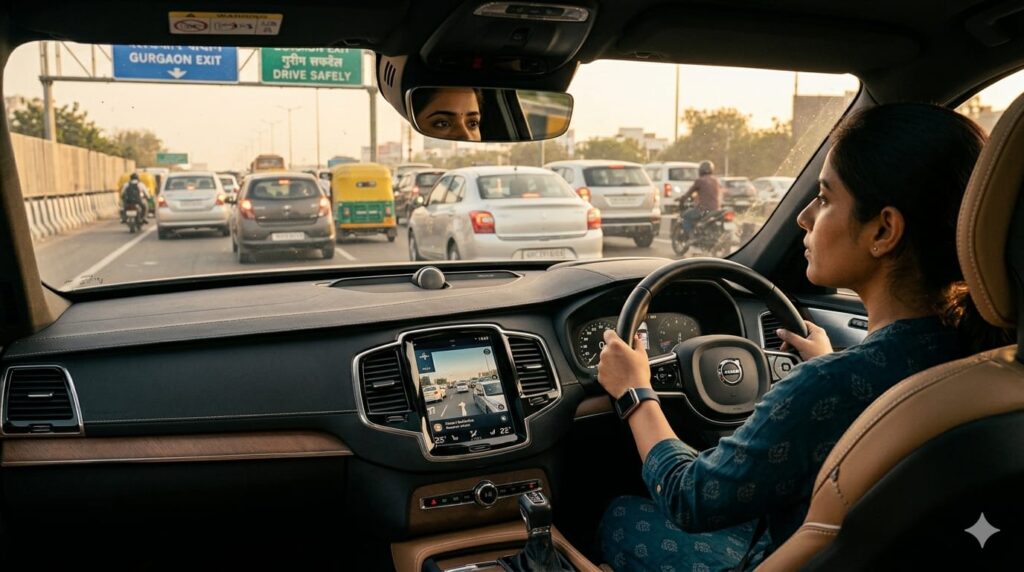
TIP #2: Master Defensive Driving Before Anything Else
“Drive as if everyone else on the road is trying to kill you.”
Why It Matters:
Defensive driving isn’t paranoia. It’s the art of anticipating danger before it happens. On Indian roads — where lane discipline is a myth, cattle can appear on highways, and overtaking from the wrong side is somehow normal — it’s not just useful. It’s survival.
Studies show that defensive drivers are involved in significantly fewer accidents than their aggressive counterparts, even when the other driver is at fault.
Common Mistakes Drivers Make:
- Tailgating (following too closely)
- Assuming other drivers will follow traffic rules
- Not maintaining safe following distance
- Reacting instead of anticipating
Practical Solution:
Follow the 3-second rule: Pick a fixed object on the road. When the car ahead passes it, count 3 seconds before you reach the same point. In rain or low visibility — double it to 6 seconds. This gives you critical reaction time.
2026 Smart Driving Angle:
In 2026, AI-assisted driver coaching apps like Mobileye GO, DriveSafe, and integrated vehicle telematics can actually score your defensive driving in real-time and suggest improvements. Some insurance companies in India are now offering premium discounts to drivers with high defensive driving scores. Literally get paid to drive smart.
🔴 Pro Tip: Scan the road 12–15 seconds ahead — not just the car in front of you. This is what professional drivers do. It gives your brain time to process threats and respond calmly instead of panic-braking.
Real-World Example:
On Bengaluru’s Outer Ring Road during peak hours, a driver practicing defensive spacing was able to stop safely when a two-wheeler suddenly cut in front without signaling — a scenario that causes hundreds of accidents monthly in metro cities.
Safety Benefits:
✅ Reduces accident probability dramatically
✅ Lowers road rage incidents
✅ Saves fuel through smoother driving
✅ Builds long-term confident driving habits
TIP #3: Your Tires Know More Than You Think
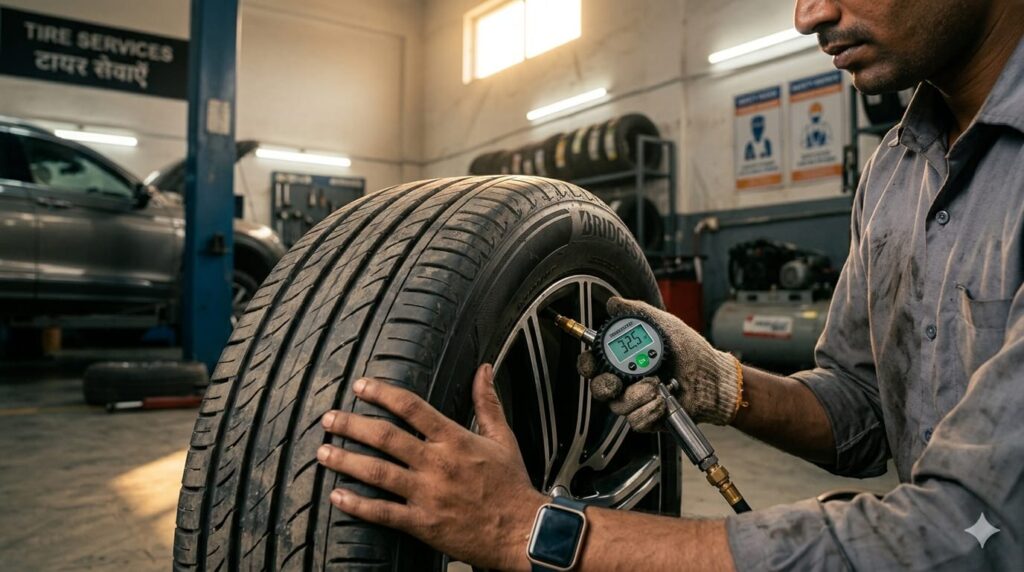
Bald tires on a wet Mumbai road in monsoon? That’s not a risk. That’s a countdown.
Why It Matters:
Your tires are the only part of your car actually touching the road. Everything — braking, steering, acceleration — depends on those four contact patches, each roughly the size of your palm. Neglect them and you’ve essentially removed the most critical safety layer from your vehicle.
Underinflated tires cause roughly 11,000 accidents annually in India, and most drivers don’t even know their tires are low until they feel the handling change.
Common Mistakes Drivers Make:
- Checking tire pressure only when it looks flat
- Ignoring uneven tread wear (sign of alignment issues)
- Not rotating tires every 5,000–8,000 km
- Running tires past their recommended lifespan (typically 5–6 years)
Practical Solution:
Check tire pressure every 2 weeks — not by looking, but with a gauge. Most modern cars have the recommended PSI printed inside the driver’s door frame. In 2026, vehicles with TPMS (Tire Pressure Monitoring Systems) alert you the moment pressure drops — trust those warnings.
2026 Smart Driving Angle:
Smart tires with embedded sensors are already in testing phases globally. By 2026, several premium Indian market vehicles are expected to feature AI-predictive tire wear analysis through connected car apps. This will flag potential blowout risks before they happen.
🔴 Pro Tip: Before any highway trip — especially during summer or monsoon — run your hand around each tire. Feel for bulges, cracks, or embedded objects. A ₹500 tire inspection could save a ₹5 lakh repair bill — or a life.
Real-World Example:
A salesperson driving on NH-44 from Delhi to Chandigarh suffered a front-right blowout at 110 km/h due to an underinflated tire that had been “looking fine.” The car veered into the median. He survived — barely — but the car was totaled.
Safety Benefits:
✅ Optimal braking distance
✅ Better fuel efficiency
✅ Reduced blowout risk
✅ Improved wet-road grip during monsoon
TIP #4: AI-Powered Dashcams Are No Longer Optional
“The camera saw what happened. The court believed the camera.”
Why It Matters:
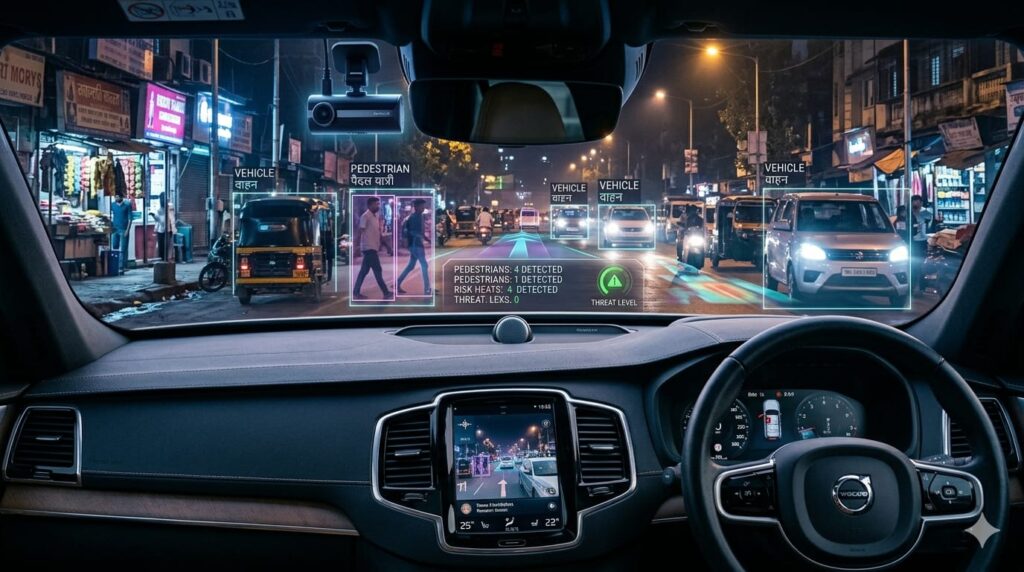
In 2026, a dashcam isn’t a luxury accessory. It’s evidence, protection, and accountability — all rolled into one compact device mounted on your windshield. With hit-and-run accidents rising and insurance fraud becoming alarmingly common on Indian roads, a dashcam can mean the difference between winning and losing a legal battle.
Common Mistakes Drivers Make:
- Using cheap dashcams with poor night vision
- Not setting dashcam to loop recording (it fills up and stops recording)
- Forgetting to check that it’s actually recording
- Not having GPS-tagged footage (essential for insurance claims)
Practical Solution:
Invest in a dual-channel AI dashcam (front + rear) with:
- 4K resolution
- Night vision capability
- GPS tagging
- Collision detection and auto-save
- Cloud backup
Brands like Vantrue, BlackVue, and 70mai offer excellent options between ₹5,000–₹20,000.
2026 Smart Driving Angle:
The newest AI dashcams in 2026 don’t just record — they actively warn you. Forward collision warnings, lane departure alerts, drowsiness detection, and even speed sign recognition are now built into premium dashcams. Your dashcam is becoming your co-pilot.
🔴 Pro Tip: Always carry a dashcam SD card with a minimum Class 10 or U3 rating for uninterrupted 4K recording. Cheap cards corrupt footage — exactly when you need it most.
Real-World Example:
A Delhi driver was wrongly accused of jumping a red light after a minor accident. His AI dashcam footage with GPS timestamp and speed data completely exonerated him in court within 30 days. Without it, the legal battle could have taken years.
Safety Benefits:
✅ Legal protection in accidents
✅ Insurance claim support
✅ Deters road rage and reckless behavior
✅ Monitors fleet and teen drivers
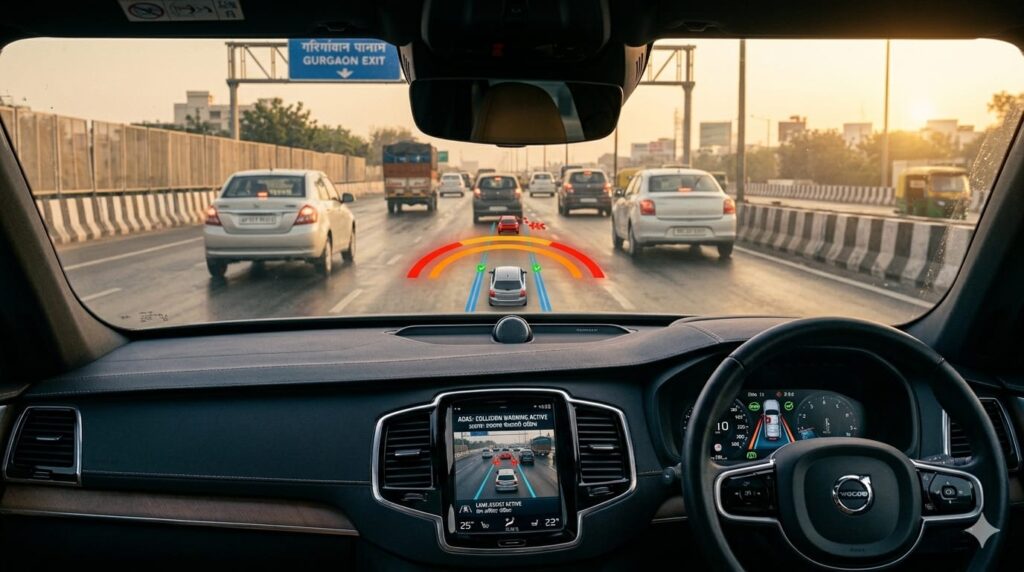
TIP #5: ADAS Safety Systems — Let Your Car Help You
Your car is smarter than you think. Are you actually using its brain?
Why It Matters:
ADAS — Advanced Driver Assistance Systems — is the collective term for a suite of technologies that assist drivers and prevent accidents before they happen. From automatic emergency braking to lane-keeping assist, these systems are no longer reserved for luxury cars. By 2026, even mid-segment Indian vehicles like the Tata Nexon, Hyundai Creta, and Maruti Grand Vitara come loaded with ADAS features.
Yet — most owners never activate them properly, or worse, turn them off because they find the alerts annoying.
Common Mistakes Drivers Make:
- Disabling ADAS alerts because they feel intrusive
- Over-relying on ADAS and driving less attentively
- Not understanding what each system does
- Failing to calibrate ADAS after windshield replacement
⚠️ Critical: ADAS cameras and sensors are mounted behind the windshield. Replacing a windshield without recalibrating ADAS can make the system dangerously inaccurate.
Practical Solution:
Read your vehicle manual’s ADAS section. Understand each feature:
| ADAS Feature | What It Does |
|---|---|
| AEB (Auto Emergency Braking) | Automatically brakes if collision detected |
| LKA (Lane Keep Assist) | Steers back if you drift out of lane |
| ACC (Adaptive Cruise Control) | Maintains safe following distance automatically |
| BSM (Blind Spot Monitoring) | Warns if vehicle in blind spot during lane change |
| DMS (Driver Monitoring System) | Detects drowsiness and distraction |
2026 Smart Driving Angle:
By 2026, Level 2+ autonomous driving is becoming mainstream in India. ADAS isn’t just safety tech — it’s the foundation of the future of mobility. Driving with ADAS properly enabled is like having an expert co-driver watching the road with you 24/7.
🔴 Pro Tip: After any major service or windshield repair, always ask your service center to perform ADAS recalibration. A misaligned camera could provide 30% off-center data — making the system unreliable when you need it most.
Safety Benefits:
✅ Reduces rear-end collisions significantly
✅ Prevents lane departure accidents
✅ Saves lives during driver microsleep moments
✅ Future-proofs your safety technology
TIP #6: Night Driving Safety — The Rules Change After Sunset
60% of fatal accidents in India happen between 9 PM and 6 AM. Are you prepared for the dark?
Why It Matters:
Night driving is exponentially more dangerous than daytime driving. Visibility is reduced. Reaction times slow. Fatigue creeps in. And on Indian highways — unlit trucks parked without reflectors, stray animals, and speeding vehicles with blinding high beams make every night drive a high-stakes situation.
Common Mistakes Drivers Make:
- Using high beams continuously (blinds oncoming drivers)
- Not dimming instrument cluster brightness (causes night blindness)
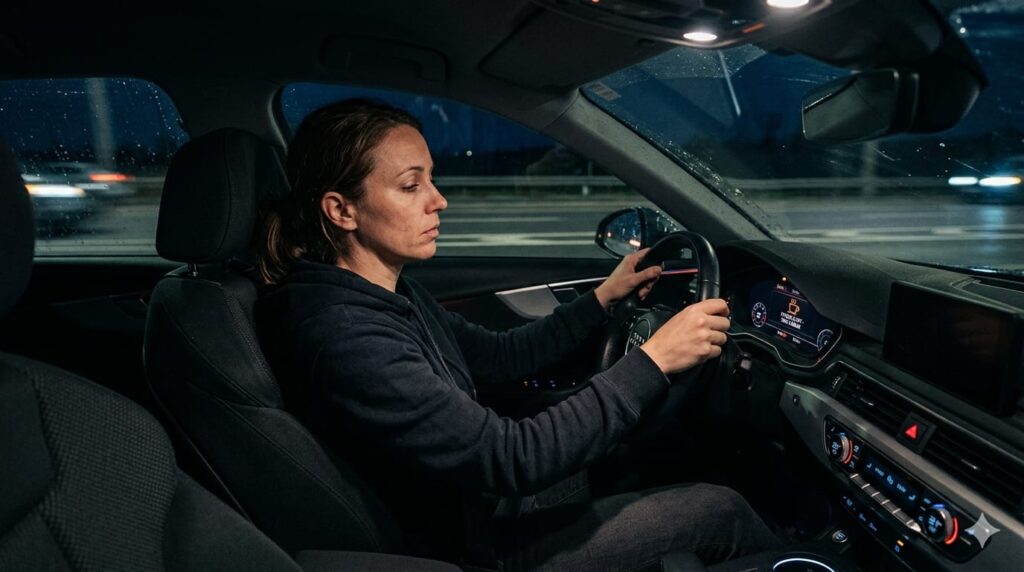
- Driving while fatigued after 11 PM
- Not checking headlight alignment (misaligned beams = dangerous)
Practical Solution:
- Always use low beam in fog or rain — high beams reflect back and reduce visibility
- Keep your windshield and headlights clean — dirty glass scatters light
- Take a break every 2 hours on night highway drives
- Use anti-glare rear-view mirror (manual night mode or auto-dimming)
2026 Smart Driving Angle:
New vehicles in 2026 feature Matrix LED headlights and adaptive high-beam assist that automatically dip for oncoming traffic. If your car has it — enable it. If not, consider aftermarket solutions. Additionally, night-vision capable dashcams and HUD (heads-up displays) are significantly improving driver awareness after dark.
🔴 Pro Tip: If an oncoming vehicle blinds you with high beams, don’t stare at the lights. Look at the left edge of your lane as a reference point and slow down. Your eyes will re-adjust faster this way.
Safety Benefits:
✅ Reduces risk of head-on collisions
✅ Improves pedestrian and animal detection
✅ Prevents fatigue-related accidents

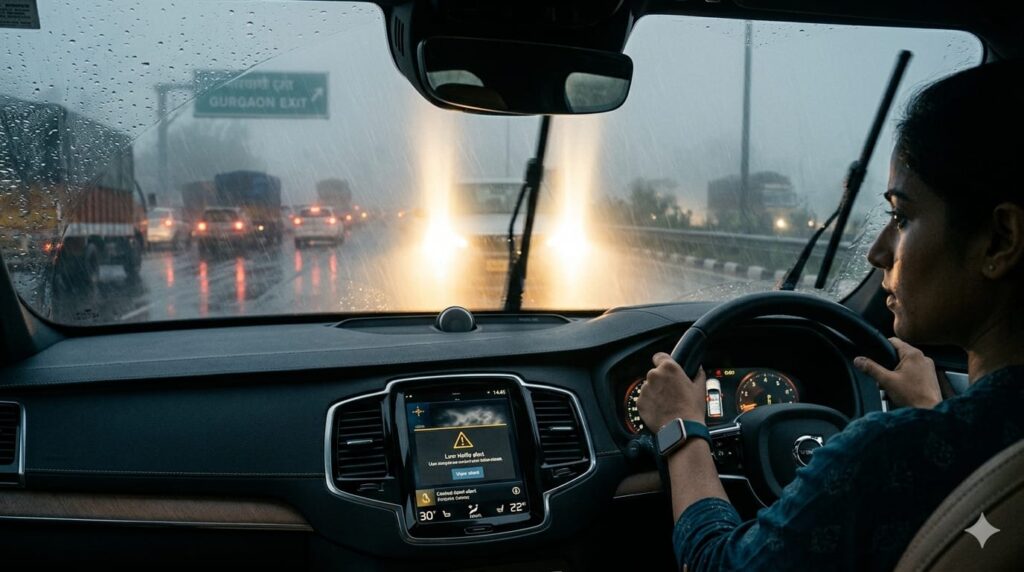
TIP #7: Rain and Fog Driving — Slow Down or Pay the Price
Monsoon in India doesn’t just bring rain. It brings chaos.
Why It Matters:
India’s monsoon season turns roads into rivers, highways into skating rinks, and visibility into a guessing game. Wet roads increase braking distance by up to 50%, and fog — especially on mountain routes and northern India highways — can reduce visibility to near zero.
Common Mistakes Drivers Make:
- Maintaining the same speed in rain as dry conditions
- Using wipers on the lowest setting when it’s pouring
- Not turning on headlights in fog (fog lights and headlights serve different purposes)
- Braking hard on waterlogged roads (causes hydroplaning)
Practical Solution:
- Reduce speed by at least 30% in rain
- Turn on fog lights in fog and headlights in heavy rain
- Avoid puddles where you can’t see the depth
- If aquaplaning (car slides on water film): don’t brake or steer sharply. Ease off the accelerator and let the car slow naturally
2026 Smart Driving Angle:
2026 vehicles with rain-sensing wipers and automatic headlight activation handle some of this automatically. But technology doesn’t replace judgment. Knowing when to pull over and wait is the mark of a truly safe driver.
🔴 Pro Tip: Before monsoon season every year, check wiper blade condition and washer fluid level. Old wiper blades smear instead of clear — creating visual distortion at exactly the wrong moment.
Safety Benefits:
✅ Prevents hydroplaning accidents
✅ Improves visibility in adverse conditions
✅ Reduces monsoon season accident risk dramatically
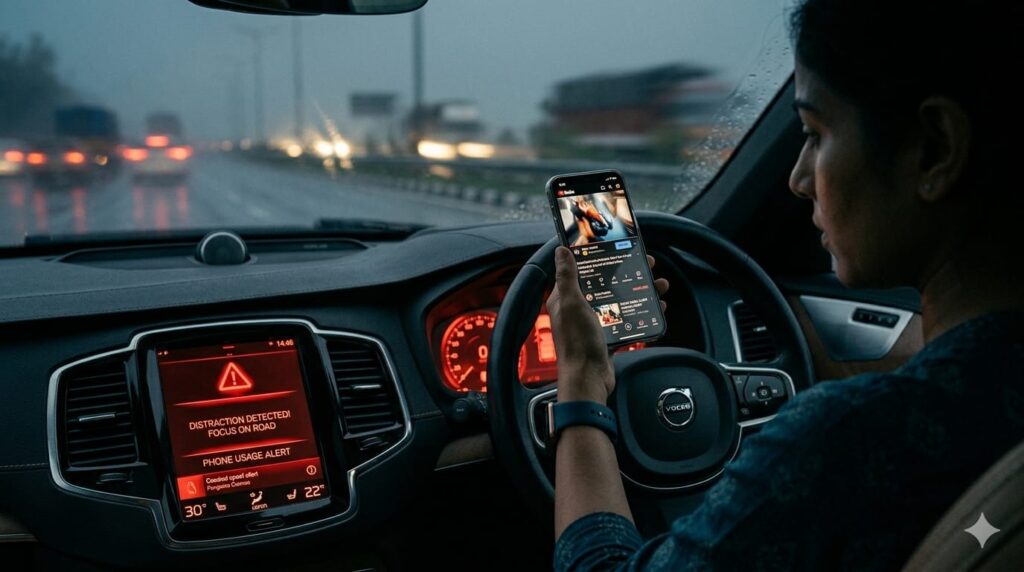
TIP #8: Put the Phone Down. Right Now.
One glance at your phone at 60 km/h = 50 meters driven completely blind.
Why It Matters:
This one is personal. Because we all know it’s wrong, and most of us still do it.
Using a mobile phone while driving increases accident risk by 400%. It’s the equivalent of driving drunk. And in 2026, with notifications, music apps, Google Maps, and WhatsApp messages demanding constant attention — the temptation is stronger than ever.
Common Mistakes Drivers Make:
- “Just checking GPS” while moving
- Reading WhatsApp messages at red lights (and continuing as they turn green)
- Hands-free calls (still mentally distracting)
- Changing music playlists while driving
Practical Solution:
- Enable Do Not Disturb While Driving mode (available on both Android and iOS)
- Mount your phone on a dashboard holder for GPS — set the route before moving
- Pull over safely if you need to make an urgent call
- Use voice commands for music and navigation
2026 Smart Driving Angle:
Modern vehicles with Apple CarPlay and Android Auto integration and voice assistant compatibility (Alexa, Google Assistant) essentially eliminate the need to touch your phone while driving. In 2026, cars with in-cabin AI assistants can read messages aloud and respond via voice — keeping your hands where they belong.
🔴 Pro Tip: Place your phone in your bag or glovebox before starting the car. If it’s not in sight, you’re less tempted. The “out of sight, out of mind” rule literally saves lives.
Real-World Example:
According to a 2023 Indian road safety report, distracted driving (primarily mobile phone use) contributed to over 12% of road accident fatalities — a figure that experts warn will rise without aggressive behavioral change.
Safety Benefits:
✅ Reduces accident risk by up to 4x
✅ Improves reaction time
✅ Keeps you legally compliant (₹5,000 fine under MV Act 2019)
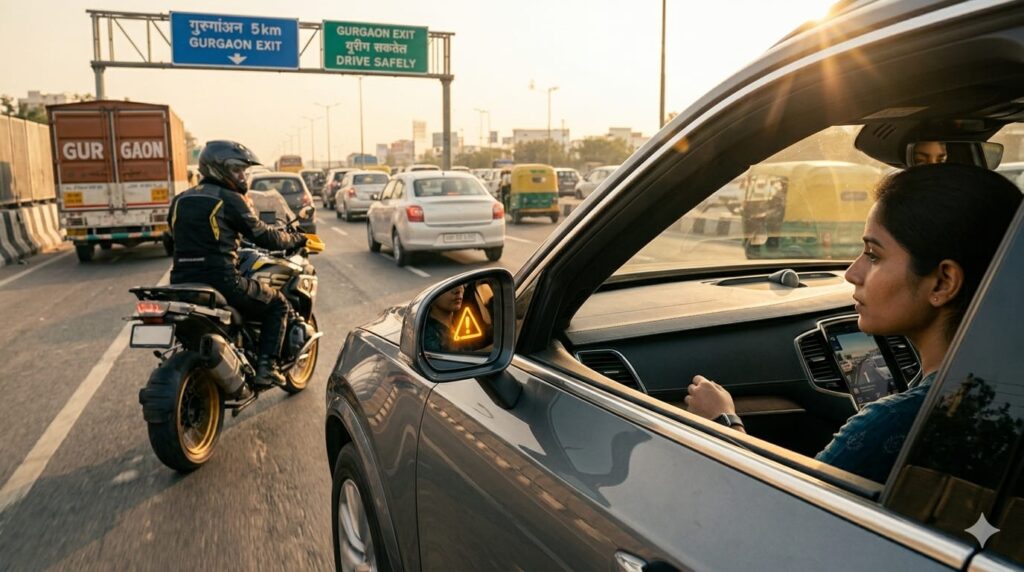
TIP #9: Blind-Spot Monitoring — See What You’re Missing
The accident wasn’t your fault. But you still didn’t see it coming.
Why It Matters:
Every vehicle has blind spots — areas around the car where your mirrors and peripheral vision simply don’t reach. On busy Indian highways and multi-lane city roads, a vehicle can be completely invisible to you just before you change lanes — with catastrophic consequences.
Common Mistakes Drivers Make:
- Relying solely on mirrors without physically checking blind spots
- Not adjusting side mirrors correctly (most drivers angle them too far inward)
- Changing lanes quickly without checking
- Assuming BSM (Blind Spot Monitoring) replaces the need to look
Practical Solution:
Correct mirror positioning:
- Adjust side mirrors so you can barely see the edge of your car
- If you can see the full side of your car in the mirror — you’re watching the wrong zone
Always combine mirror checks with a quick shoulder check before lane changes. No technology replaces the human glance.
2026 Smart Driving Angle:
In 2026, 360-degree surround view cameras and enhanced BSM systems with audio-visual alerts are standard on most new Indian market SUVs. Some premium vehicles now project a live video feed of the blind spot directly into the instrument cluster when you activate the turn signal. This is genuinely game-changing.
🔴 Pro Tip: After getting into any rental car or unfamiliar vehicle, spend 60 seconds adjusting all mirrors before driving. The mirrors in the previous driver’s position could create blind spots that don’t match your height or seating position.
Safety Benefits:
✅ Prevents lane-change accidents
✅ Critical during highway driving and heavy traffic
✅ Significantly reduces side-impact collision risk
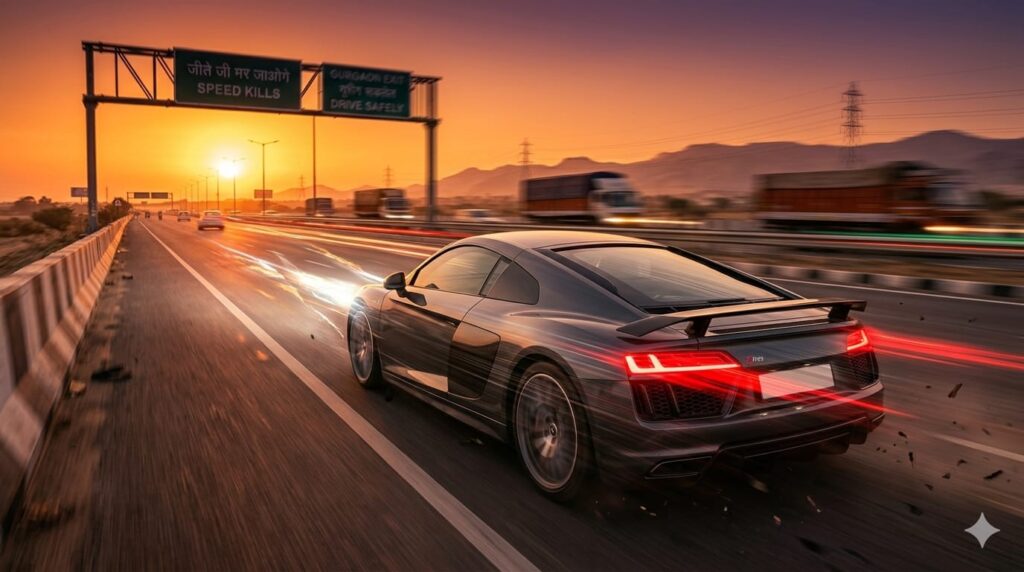
TIP #10: Highway Safety — Speed Thrills, But It Also Kills
India’s expressways are beautiful. They’re also the most dangerous roads in the country.
Why It Matters:
India’s expanding expressway network — Delhi-Mumbai Expressway, Purvanchal Expressway, Samruddhi Mahamarg — is a marvel of modern engineering. But higher speed limits mean higher energy in a collision, and the severity of accidents increases exponentially with speed. A collision at 120 km/h is roughly 4x more severe than one at 60 km/h.
Common Mistakes Drivers Make:
- Driving at maximum speed for extended periods without breaks
- Overtaking from the left on expressways
- Not using hazard lights when stopping on the shoulder
- Ignoring fatigue signals — drowsy driving is as dangerous as drunk driving
Practical Solution:
- Follow the 2-hour rule — take a 15-minute break every 2 hours on long drives
- Keep left lane for cruising, right lane for overtaking — always
- Never stop on the main expressway — use the emergency lane only
- Carry reflective triangles and place them 50m behind your car if you break down
2026 Smart Driving Angle:
In 2026, India’s smart highways feature AI-based speed monitoring, dynamic speed limit signs, and connected vehicle infrastructure that can warn your car about accidents ahead. Vehicles with V2X (Vehicle-to-Everything) communication can receive real-time alerts about road conditions before you encounter them.
🔴 Pro Tip: On long highway drives, the most underrated safety tool is a co-pilot. Having someone in the passenger seat to keep you alert, navigate, and watch for hazards reduces highway fatigue risk dramatically. Use your passengers — not just your phone’s GPS.
Safety Benefits:
✅ Reduces high-speed collision severity
✅ Prevents fatigue-related highway accidents
✅ Ensures proper emergency response if car breaks down
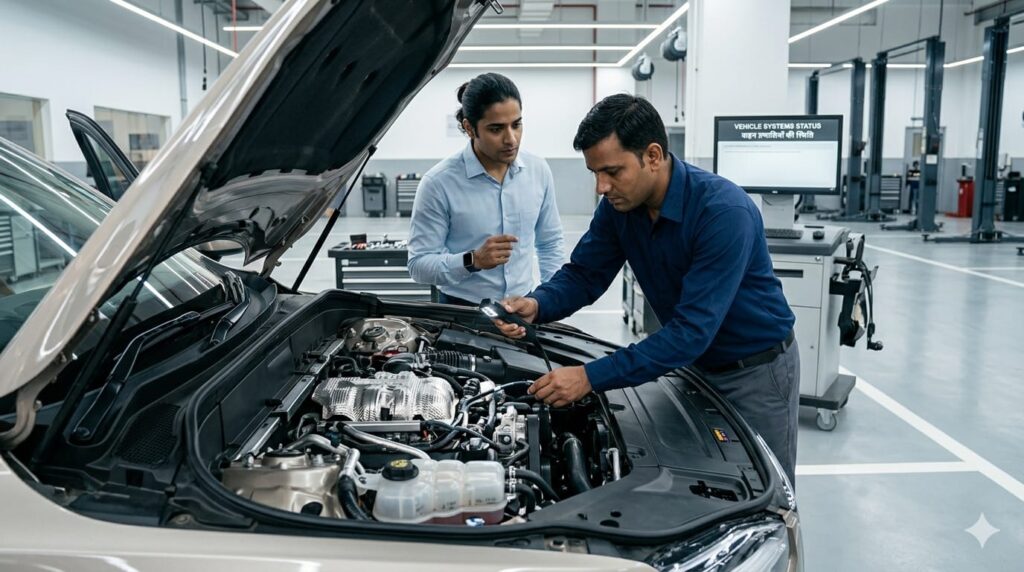
TIP #11: Regular Vehicle Inspections — Non-Negotiable
Your car is quietly screaming for help. Are you listening?
Why It Matters:
A vehicle breakdown on a highway at night isn’t just inconvenient. It’s genuinely life-threatening. And in most cases, the signs were there weeks before — ignored squealing brakes, a subtle vibration in the steering, a warning light dismissed with “I’ll check it later.”
In India, many drivers skip regular servicing due to cost concerns or busy schedules. This is a false economy that can cost infinitely more in repairs — or worse.
Common Mistakes Drivers Make:
- Ignoring dashboard warning lights
- Skipping service intervals to save money
- Not checking fluid levels (engine oil, brake fluid, coolant)
- Postponing brake pad replacement until metal-on-metal contact
Practical Solution — Monthly Quick Inspection Checklist:
| Item | Check |
|---|---|
| Engine oil level | Every month or 1,000 km |
| Tire pressure | Every 2 weeks |
| Brake performance | Every service |
| Headlights/tail lights | Monthly |
| Windshield wipers | Every 6 months |
| Battery terminals | Every service |
| Air filter | Every 15,000 km |
2026 Smart Driving Angle:
In 2026, connected car technology and OBD-II diagnostic apps (like Carista, OBD Fusion) allow you to plug into your car’s diagnostic port and run health checks from your smartphone. Some vehicles now send maintenance reminders directly to your phone — essentially managing their own service schedules.
🔴 Pro Tip: Never ignore the TPMS, ABS, or Check Engine warning lights. These aren’t decorative. Each represents a specific system failure. A ₹200 diagnostic scan at your service station could identify a ₹50,000 problem before it becomes irreparable.
Safety Benefits:
✅ Prevents unexpected breakdowns
✅ Ensures braking and steering systems are reliable
✅ Extends vehicle lifespan significantly
✅ Maintains warranty compliance
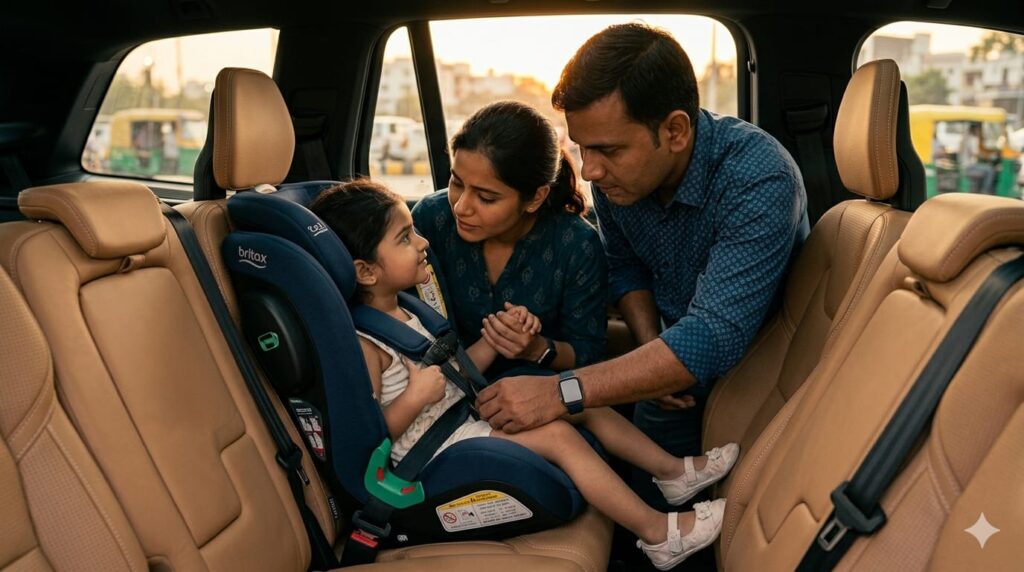
TIP #12: Child Safety in Cars — Never, Ever Compromise
For them, you’d do anything. So do this.
Why It Matters:
Children are not small adults. Their bodies absorb crash forces differently. A child sitting in the front seat, unbuckled in the rear, or on a parent’s lap is in catastrophically greater danger in any collision — even a minor one.
The Central Motor Vehicles Rules 138(3) now mandate child restraint systems for children below 4 years. Yet compliance across India remains dangerously low.
Common Mistakes Drivers Make:
- Allowing children to stand or move freely inside a moving vehicle
- Seating children in the front passenger seat under age 12
- Using adult seatbelts on children under 135cm height (doesn’t protect correctly)
- Buying uncertified cheap car seats
- Not installing child seats correctly (wrong angle, loose fitting)
Practical Solution:
| Child Age/Size | Recommended Restraint |
|---|---|
| 0–15 months | Rear-facing infant seat |
| 15 months–4 years | Forward-facing child seat with harness |
| 4–12 years | Booster seat with seatbelt |
| 12+ or 135cm+ | Adult seatbelt in rear seat |
2026 Smart Driving Angle:
Smart car seats in 2026 — from brands like Chicco, Britax, and Maxi-Cosi — now feature load indicators, installation confirmation apps, and even temperature sensors that alert parents if a child is left in a hot car. This technology literally saves lives.
🔴 Pro Tip: After installing a child seat, try to move it with both hands. If it moves more than 2.5cm in any direction, it’s not installed correctly. Read the manual — or visit a certified installer. Most reputable baby stores offer free installation checks.
Safety Benefits:
✅ Reduces child injury risk by up to 70%
✅ Legally compliant
✅ Gives children the protection they deserve
TIP #13: Emergency Kit — Your Car’s Lifesaver in a Crisis
Hope is not a safety strategy. Preparation is.
Why It Matters:
You could be the safest driver on the road and still face an emergency due to someone else’s mistake, a sudden mechanical failure, or a natural event. What happens in the first 10 minutes after an accident often determines outcomes — for you and for others.
Most Indian drivers’ cars contain: A spare tire they’ve never inflated and a jack they don’t know how to use.
That’s not an emergency kit. That’s false hope.
Common Mistakes Drivers Make:
- No first aid kit in the car
- Dead torch/flashlight
- No reflective safety triangle
- No jumper cables
- No basic tools
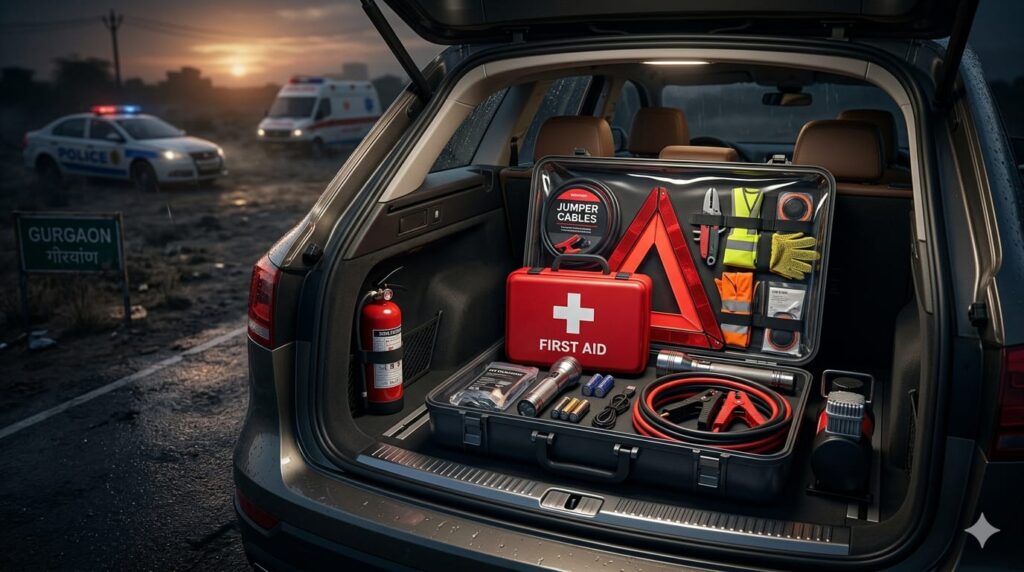
Essential Emergency Kit Checklist:
| Item | Purpose |
|---|---|
| First Aid Kit | Treat injuries immediately |
| Reflective Safety Triangles (x3) | Alert traffic after breakdown |
| LED Torch + Extra Batteries | Night visibility |
| Jumper Cables / Jump Starter Pack | Dead battery rescue |
| Tow Rope | Vehicle recovery |
| Fire Extinguisher (ABC Type) | Vehicle fire — first 60 seconds matter |
| Emergency Blanket | Shock/cold protection |
| Water Bottles (2 liters) | Hydration/radiator emergency |
| Fully Inflated Spare Tire + Working Jack | Tire puncture |
| Charged Power Bank | Phone backup for emergency calls |
2026 Smart Driving Angle:
In 2026, smart emergency kits with integrated Bluetooth distress beacons can automatically contact emergency services and share your GPS location when activated. Several highway patrol services are also connected to digital SOS systems. Keep the National Highway Emergency Helpline: 1033 saved in your phone.
🔴 Pro Tip: After using anything from your emergency kit, replace it immediately. An emergency kit missing its key component is as useful as no kit at all.
Safety Benefits:
✅ Provides critical response capability in first minutes
✅ Reduces accident severity outcomes
✅ Helps other accident victims too
✅ Legal requirement in many states
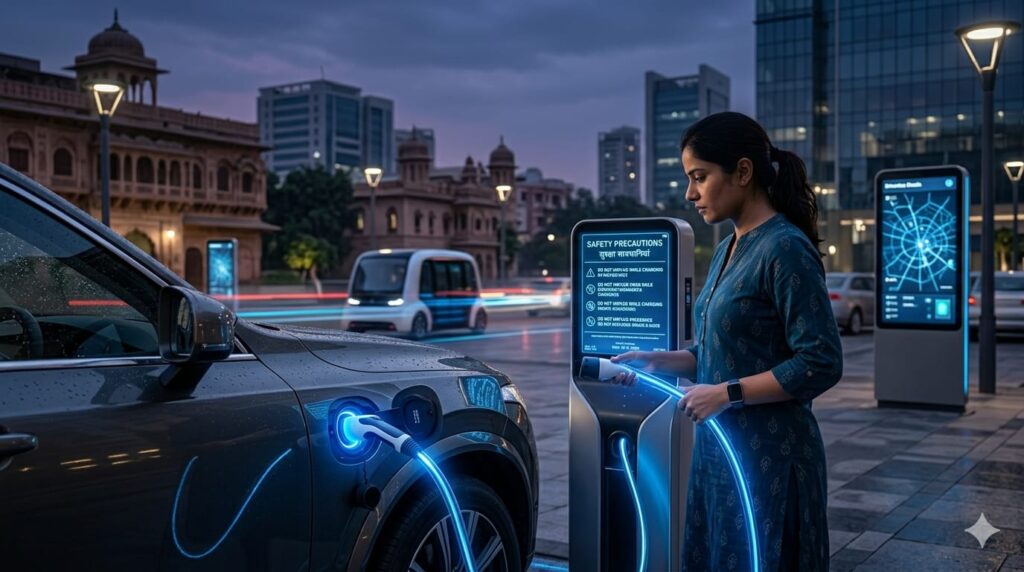
TIP #14: EV Safety Awareness — The New Frontier of Road Safety
Electric vehicles are the future. But they come with a new set of rules.
Why It Matters:
India’s EV revolution is here. Tata Nexon EV, MG ZS EV, BYD Atto 3, Hyundai Ioniq 5 — electric vehicles are increasingly common on Indian roads. But with new technology comes new safety considerations that neither drivers nor bystanders are fully prepared for.
EVs present unique safety challenges:
- Silent operation — pedestrians and cyclists can’t hear them coming
- High-voltage battery systems — different rescue protocols in accidents
- Thermal runaway — battery fires burn differently and longer than fuel fires
- Charging safety — improper charging at home is a fire risk
Common Mistakes EV Drivers Make:
- Using non-certified third-party chargers
- Ignoring battery health indicators
- Not knowing emergency procedures for EV battery fires
- Parking in poorly ventilated areas while charging
Practical Solution:
- Always use BIS-certified charging equipment
- Never charge with a damaged charging cable
- In case of EV battery fire: Do not use water. Call fire services immediately — EV fires require specialized foam or large volumes of water to contain thermal runaway
- Inform emergency responders that your vehicle is an EV — rescue cutting procedures are different
2026 Smart Driving Angle:
By 2026, India’s BIS standards for EV battery safety (IS 17215) are being actively enforced. Newer EVs feature Battery Management Systems (BMS) with thermal monitoring, automatic shutoff in overcharge situations, and collision-triggered HV battery disconnect systems. These are critically important safety features — learn what your EV has.
🔴 Pro Tip: Carry your EV’s emergency response guide card in your glovebox. Emergency responders need to know your vehicle’s high-voltage cut-off location. Most EVs have it printed — make sure responders can find it fast.
Safety Benefits:
✅ Prevents charging-related fires
✅ Ensures correct emergency response
✅ Protects both driver and first responders
✅ Maintains battery longevity and reliability
TIP #15: Speed Management — The Smartest Skill You’ll Ever Learn
It’s not about going slow. It’s about knowing exactly how fast is safe — right now, in this exact moment.
Why It Matters:
Speed kills. Not the concept of speed — but inappropriate speed. Driving at 100 km/h on an empty highway at noon is very different from driving at 100 km/h in rain, at night, on a road under construction, or through a city.
Speed management is the skill of continuously calibrating your speed to conditions — not just to the speed limit sign.
According to WHO, a 5% reduction in average vehicle speed reduces fatal accident frequency by 30%. That’s enormous.
Common Mistakes Drivers Make:
- Treating speed limits as targets rather than maximums
- Not slowing for road surface changes (potholes, speed bumps, gravel)
- Maintaining high speed in unfamiliar areas
- Underestimating stopping distance at high speeds
Braking Distance Reality Check:
| Speed | Reaction + Braking Distance (Dry Road) |
|---|---|
| 40 km/h | ~27 meters |
| 60 km/h | ~45 meters |
| 80 km/h | ~69 meters |
| 100 km/h | ~100 meters |
| 120 km/h | ~140 meters |
Practical Solution:
- Reduce speed by 20 km/h in school zones, hospital areas, and market areas
- Use cruise control on open highways to maintain consistent, fuel-efficient speed
- Never trust that you can “handle” your car at high speed until braking is needed
2026 Smart Driving Angle:
In 2026, Intelligent Speed Assistance (ISA) systems — already mandated in new EU vehicles — are being explored for Indian regulations. These systems read speed signs via cameras and GPS and gently alert (or assist) drivers when exceeding limits. Connected cars also receive dynamic speed limit updates based on real-time traffic and weather conditions.
🔴 Pro Tip: On Indian roads, always assume the road ahead has something you can’t see — a pothole, a parked vehicle, a child running out, a sleeping dog. This mental habit naturally moderates speed and keeps you perpetually alert.
Safety Benefits:
✅ Single greatest reducer of accident fatality risk
✅ Lower fuel consumption
✅ Reduced brake and tire wear
✅ Legally compliant — avoids fines and license suspension
⚠️ Safety Mistakes That Could Cost Your Life
Let’s be brutally honest. Here are the most dangerous driving behaviors seen on Indian roads in 2026:
- Drunk driving — Still responsible for 13% of all road deaths in India
- Driving with expired fitness certificate — Your car may be mechanically unsound and you wouldn’t know
- Not stopping for pedestrians at zebra crossings — Pedestrian fatalities are rising
- Overloading vehicles — Affects braking, handling, and tire integrity
- Driving with one working headlight — Severely misjudges your lane position to oncoming traffic
- Skipping annual insurance renewal — Leaves you legally and financially exposed
- Removing airbag fuses to silence warning lights — An insane practice that still happens
Every single one of these is preventable. Every single one.
✅ Quick Emergency Checklist — Laminate This. Stick It in Your Car.
text🚨 ACCIDENT / EMERGENCY RESPONSE CHECKLIST

□ Stop vehicle safely. Engine OFF.
□ Activate hazard lights immediately
□ Check yourself and passengers for injuries
□ Do NOT move injured persons unless immediate danger
□ Place reflective triangles 50m behind vehicle
□ Call 112 (Emergency) or 1033 (Highway Helpline)
□ Take photos for insurance documentation
□ Do not admit fault at the scene
□ Contact your insurance helpline
□ If EV: Inform responders it's electric
🔄 Myths vs. Reality — Driving Safety Edition
| 🚫 The Myth | ✅ The Reality |
|---|---|
| “Airbags will save me without a seatbelt” | Airbags are DESIGNED to work WITH seatbelts — without one, airbag deployment can injure or kill |
| “I’m a good driver, I don’t need ADAS” | Even expert drivers have reaction limits. ADAS reacts in milliseconds |
| “High beams in fog improve visibility” | High beams REFLECT back in fog — making visibility WORSE |
| “I can feel when my tires need air” | Tires can be 25% underinflated with no visible sign |
| “Short trips don’t need seatbelts” | Most accidents happen within 5km of home |
| “Hands-free calls are completely safe” | Mental distraction remains even without physical phone use |
| “Electric cars are more dangerous in rain” | Modern EVs have IP67 battery protection — safe in wet conditions |
| “Newer cars don’t need regular checks” | Electronics fail, sensors drift, fluids deplete — regardless of car age |
🧠 Smart Driver Habits in 2026
The best drivers in 2026 share these daily habits:
- 🔲 Pre-drive check: 60-second walk-around before every journey
- 🔲 Phone DND mode: Activated before engine starts
- 🔲 Seat + mirror adjustment: Every time, every driver
- 🔲 Route awareness: Know your route. Unexpected routes create unexpected risks.
- 🔲 Fuel/charge check: Never start a long journey below 25% fuel/charge
- 🔲 Weather check: Know road conditions before you leave
- 🔲 Rest before driving: Never drive if you haven’t slept 7+ hours before a long trip
- 🔲 Dashboard scan: Any warning lights before moving? Address them first.
- 🔲 Emergency contacts saved: Family + mechanic + insurance helpline
- 🔲 Fitness to drive: Never drive on heavy medication that causes drowsiness
💛 The Emotional Conclusion — Because Safety Is Personal
Here’s the truth that no statistic can fully capture:
Every person killed on an Indian road is someone’s world.
They’re a parent who won’t see their child’s first day of school. A son who won’t make it home for Diwali dinner. A young woman who had everything ahead of her. A friend who was supposed to meet you for coffee on Saturday.
Road accidents don’t just claim lives. They shatter families, haunt survivors, and leave permanent voids in communities.
And here’s the hardest part: The driver often survives. The driver has to live with what happened.
These 15 tips aren’t rules someone invented to annoy you. They are lessons written in grief. Every one of them came from an accident that happened to a real person, on a real road, at a real moment when one small different decision could have changed everything.
In 2026, you have more tools, more technology, and more information to drive safely than any generation before you. Use it.
Drive like your family is waiting for you. Because they are.
📢 SHARE. DRIVE SAFE. COME HOME.
Did these 15 tips open your eyes? Share this article with someone you care about. A parent. A young driver. A friend who drives a little too fast.
One share could genuinely save a life.