
7 EV Myths That Need to Die in 2026
Many EV myths that need to die in 2026 are still preventing drivers from switching to electric vehicles.
The problem? Many of these EV myths are keeping otherwise interested drivers stuck in the gas station lane, wallet-deep in fossil fuels, while missing out on one of the most significant automotive revolutions of our lifetime.
Let’s pull back the curtain on the biggest electric car myths still making the rounds—and replace fiction with electric vehicle facts that might just change how you think about your next car.
Why EV Myths Still Confuse Car Buyers
Walk into any barbershop, coffee shop, or family dinner, and someone’s bound to have an opinion about EVs.
“They don’t work in winter.”
“The batteries die after three years.”
“You’ll be stranded with nowhere to charge.”
Here’s the truth: most of these EV misconceptions were formed years ago, based on early-generation technology or—let’s be honest—pure speculation.
Meanwhile, electric vehicles have quietly evolved into legitimate daily drivers for millions of Americans, from California highways to Minnesota snowstorms.
Let’s separate the myths from reality.
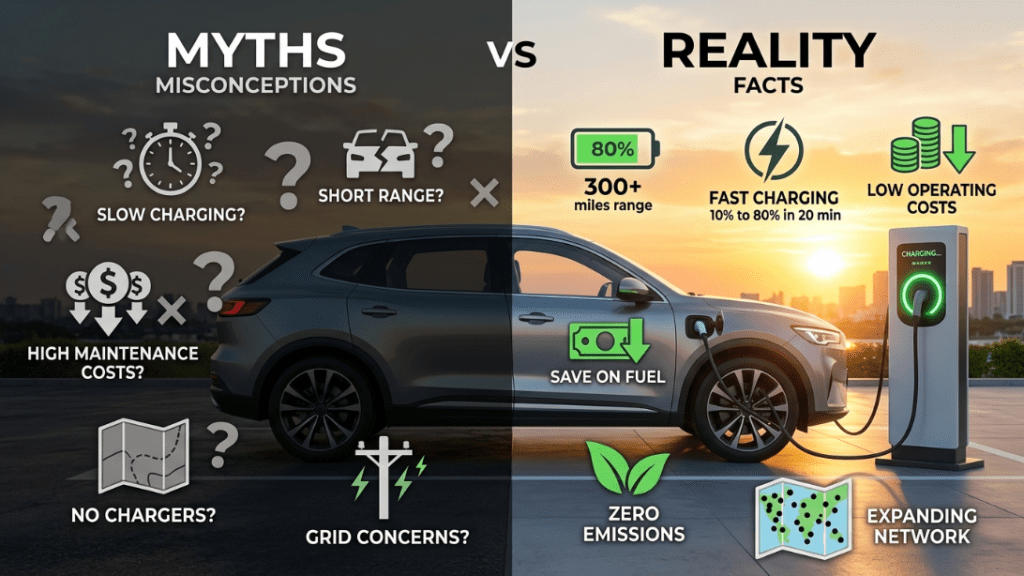
EV Myth #1: EV Batteries Only Last a Few Years
The Myth:
Electric car batteries degrade rapidly and need expensive replacement after just a few years of driving.
The Reality:
This is perhaps the most persistent of all EV charging myths—and the least accurate.
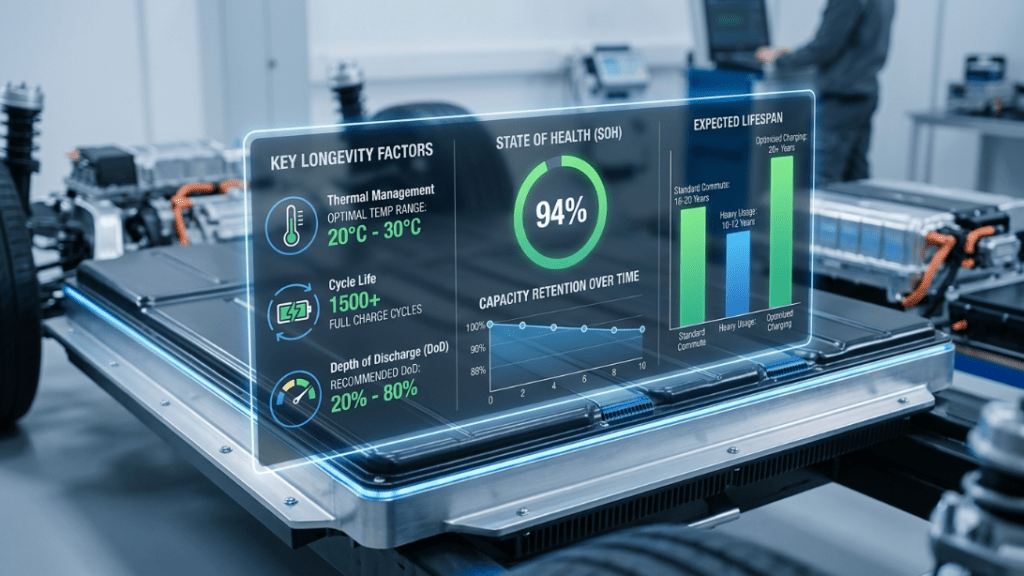
Modern EV batteries are engineered for the long haul. Most manufacturers warranty their batteries for 8 years or 100,000 miles, whichever comes first. But here’s what they don’t always advertise: the batteries typically last much longer than the warranty period.
The Real EV Battery Lifespan Explained
- Tesla Model S vehicles regularly exceed 200,000 miles with over 90% battery capacity remaining
- A 2020 study by Geotab found average battery degradation of only 2.3% per year
- Many EVs from the early 2010s are still running on original battery packs
The EV battery truth? These power packs are outlasting expectations, not falling short of them. Battery chemistry has improved dramatically, with thermal management systems and software optimization protecting cells from the extreme charge cycles that cause degradation.
EV Myth #2: EVs Don’t Work in Cold Weather
The Myth:
Electric vehicles lose all their range in winter and become unreliable in cold climates.
The Reality:
Drive through Norway—the country with the world’s highest EV adoption rate—in January, and you’ll see Teslas, Nissan Leafs, and Polestars navigating snow-covered roads without drama.
Yes, cold weather does impact EV range, typically reducing it by 20-40% in extreme conditions. But let’s add context: gas-powered cars also lose efficiency in winter (about 15-25%), you just don’t notice it as much because you weren’t tracking range as closely.
Winter Electric Vehicle Myths vs Reality
- Battery chemistry slows down, reducing available energy
- Cabin heating draws power (though heat pumps in newer EVs minimize this)
- Regenerative braking effectiveness decreases on icy roads
What smart EV drivers do:
- Precondition the cabin while plugged in (warming the car using grid power, not battery)
- Park in garages when possible
- Use heated seats instead of blasting cabin heat
- Plan for slightly more frequent charging stops on road trips
Are EVs reliable in winter? Absolutely. They start every time (no frozen engines), require no warmup idling, and handle snow beautifully thanks to low center of gravity and instant torque control.

EV Myth #3: There Aren’t Enough Charging Stations
EV Charging Myths That Need to Die
You’ll get stranded because public charging infrastructure doesn’t exist.
The Reality:
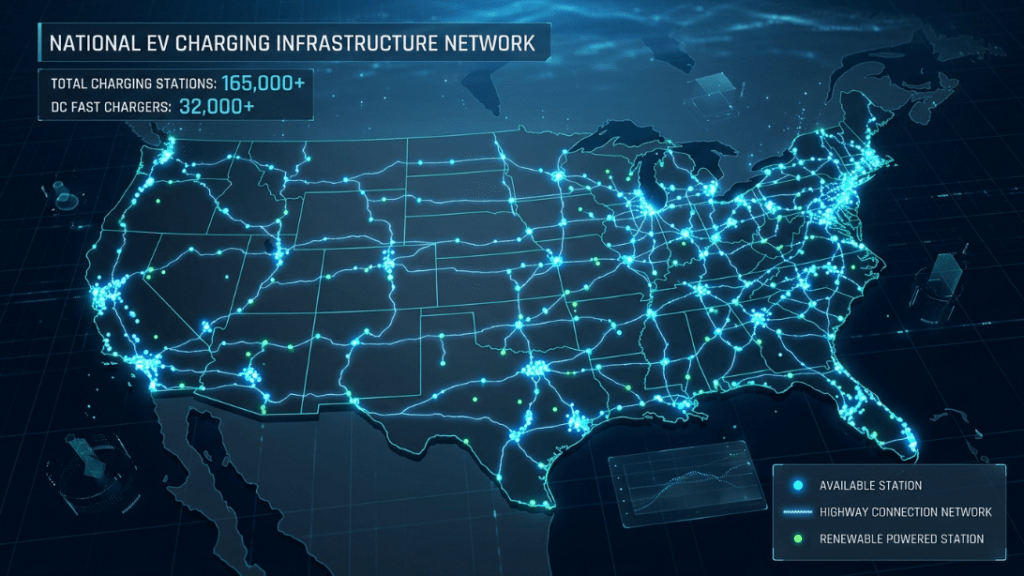
As of 2024, the United States has over 140,000 public charging outlets at more than 53,000 stations, according to the Department of Energy’s Alternative Fuels Data Center.
For comparison, there are approximately 150,000 gas stations in the U.S.—but here’s the game-changer: 80% of EV charging happens at home.
Think about it. You wake up every morning with a “full tank” because you plugged in overnight. No gas station detours, no standing in the cold pumping fuel, no convenience store temptations.
The charging landscape today:
- Tesla Supercharger network: 50,000+ connectors globally, strategically placed on major routes
- Electrify America, EVgo, ChargePoint rapidly expanding networks
- New federal funding allocating $7.5 billion for charging infrastructure
- Many workplaces, hotels, and shopping centers adding chargers
Range anxiety is real for first-time EV shoppers—but statistically, it fades within the first month of ownership as drivers realize their actual daily driving needs.
EV Myth #4: EVs Are Too Expensive
The Myth:
Electric vehicles cost more than average buyers can afford.
The Reality:
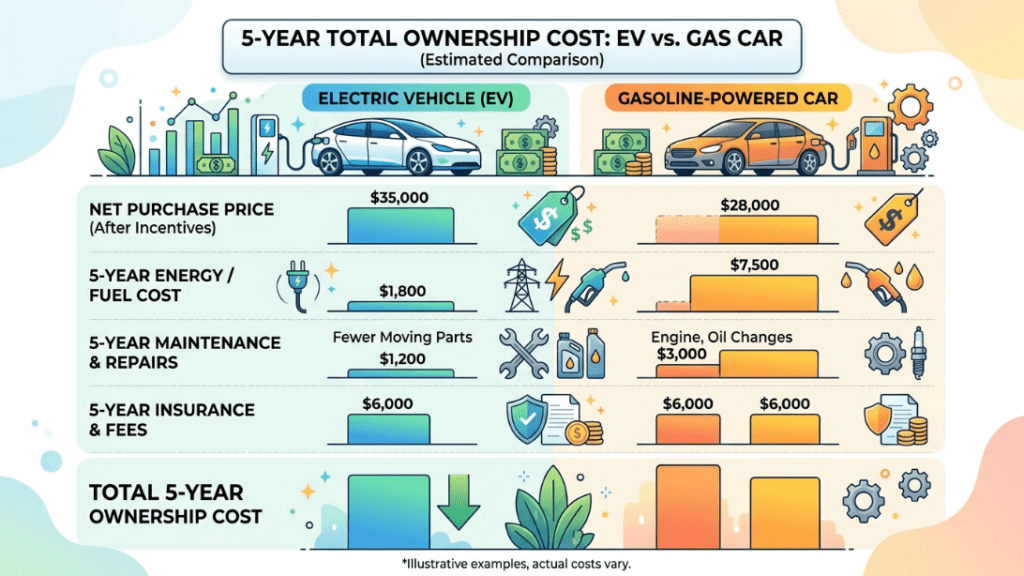
The sticker price conversation around EVs is incomplete without discussing total cost of ownership.
Upfront costs are dropping:
- Multiple new EVs priced under $35,000 (Chevy Equinox EV, Nissan Ariya)
- Federal tax credit up to $7,500 for qualifying vehicles
- Additional state incentives ranging from $1,000 to $5,000
- Used EV market growing with affordable options
The Truth About Electric Vehicle Ownership Costs
- Electricity costs roughly 60-70% less than gasoline per mile
- Virtually no maintenance: no oil changes, transmission service, or exhaust systems
- Brake pads last 2-3x longer thanks to regenerative braking
- Lower insurance rates with some carriers
A 2023 analysis by Consumer Reports found that EV owners save an average of $6,000-$10,000 over the vehicle’s lifetime compared to gas equivalents. That’s not accounting for the federal tax credit.
Check Out This what-to-know-before-buying-an-electric-car-in-2026
EV Myth #5: EVs Aren’t Actually Better for the Environment
The Myth:
When you factor in battery production and electricity generation, EVs are just as bad—or worse—for the environment than gas cars.
The Reality:
This myth deserves nuance, not headlines.
Yes, EV battery production is energy-intensive. Manufacturing an EV does create a larger carbon footprint upfront compared to building a gas car.
But here’s what the comprehensive lifecycle analyses show:
Electric Car Myths About Pollution and Emissions
- Even when charged on the U.S. grid (which includes coal and natural gas), EVs produce less than half the emissions of comparable gas vehicles over their lifetime
- In states with cleaner grids (California, New York, Washington), the advantage grows dramatically
- As the grid gets cleaner, every EV automatically gets “cleaner” without any hardware changes
The battery production emissions? Typically offset within 1-2 years of driving, depending on local electricity mix.
Gas cars, meanwhile, emit pollutants every single mile, forever. There’s no “break-even point” where they become cleaner.
EV Myth #6: The Grid Can’t Handle Mass EV Adoption
The Myth:
If everyone switches to EVs, the electrical grid will collapse.
The Reality:
Grid capacity concerns are valid for planning purposes—but catastrophic predictions miss how energy systems actually evolve.
Common Electric Vehicle Myths About Power Grids
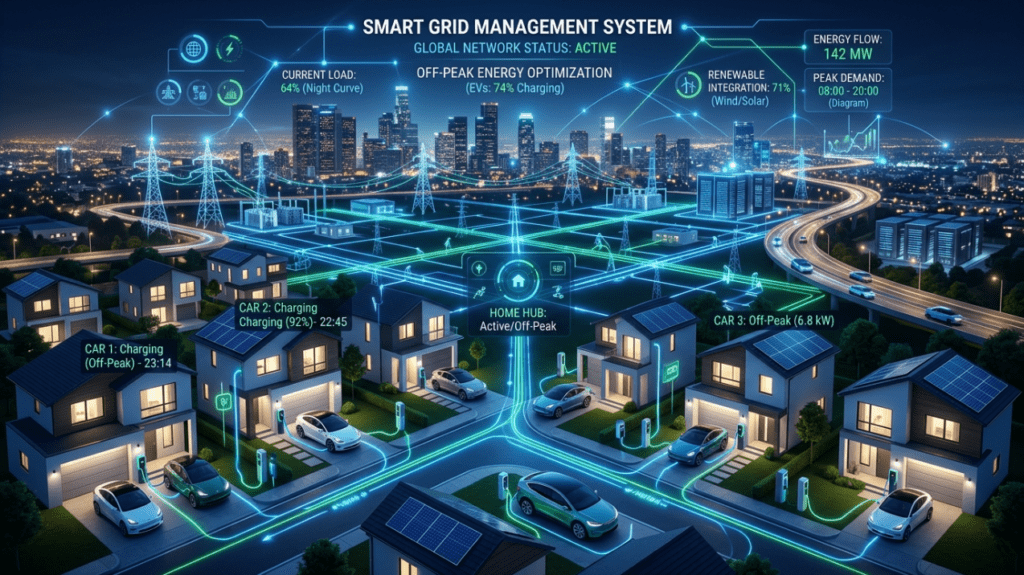
- Most EV charging happens overnight during off-peak hours when excess capacity exists
- Time-of-use rates incentivize off-peak charging
- Vehicle-to-grid (V2G) technology can turn EVs into mobile battery storage, stabilizing the grid
- EV adoption is gradual, giving utilities years to upgrade infrastructure
California—the state with the highest EV population—has successfully managed over 1 million EVs without grid failures, even while asking drivers to delay charging during extreme heat events.
The grid handled the transition from horses to gas cars, from window units to central air conditioning, and from desktop computers to ubiquitous connectivity. It’ll adapt to EVs too, especially with smart charging technology.
EV Myth #7: EVs Catch Fire More Than Gas Cars
The Myth:
Electric vehicles are fire hazards waiting to happen.
The Reality:
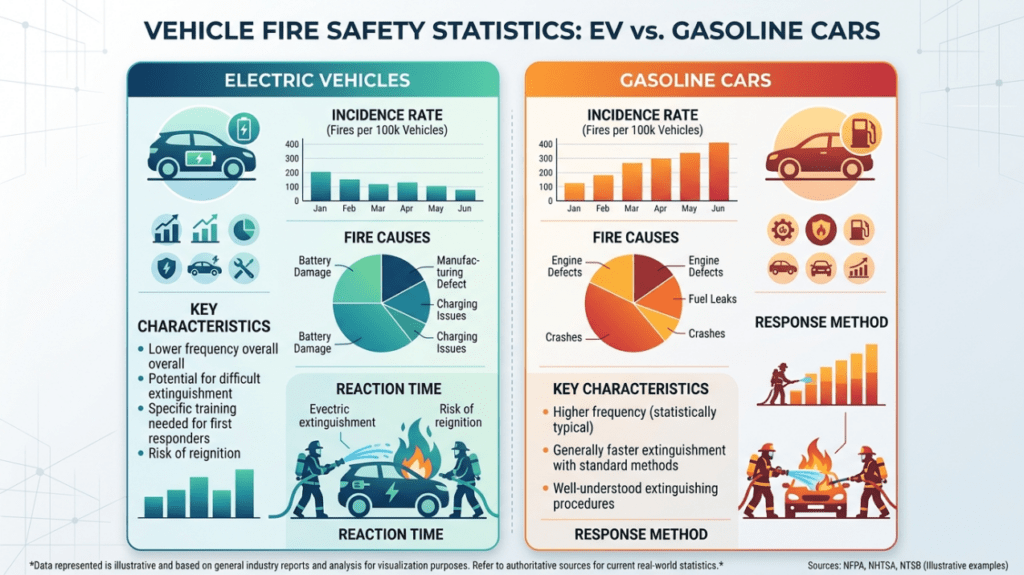
This myth persists because EV fires make headlines; gas car fires don’t.
EV Safety Myths Debunked With Data
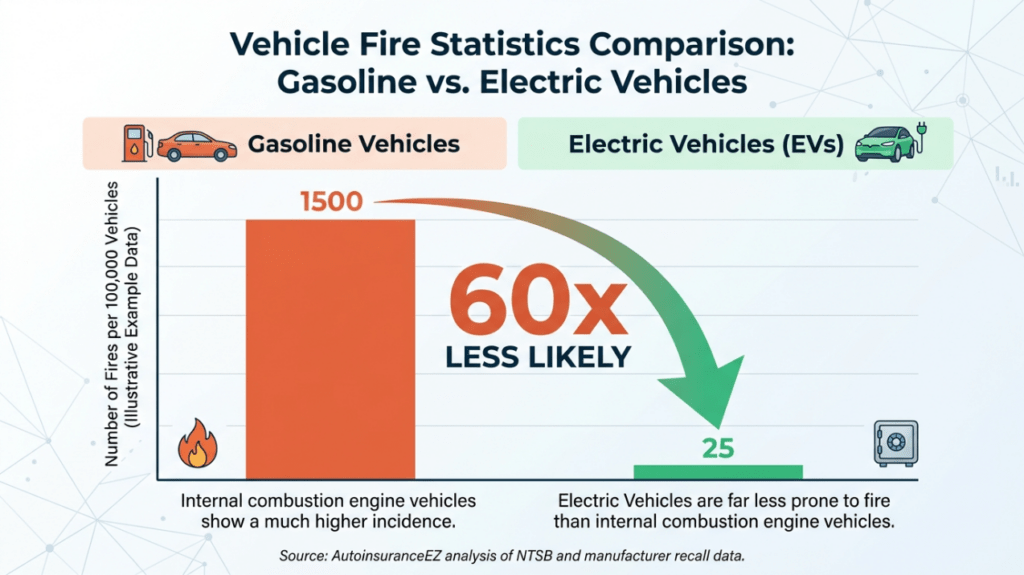
According to a comprehensive study by AutoinsuranceEZ analyzing NTSB and recall data:
- Gasoline vehicles: 1,529.9 fires per 100,000 sales
- Hybrid vehicles: 3,474.5 fires per 100,000 sales
- Electric vehicles: 25.1 fires per 100,000 sales
EVs are statistically 60 times less likely to catch fire than gas-powered cars.
When EV fires do occur—usually after severe crashes that would total any vehicle—they’re more difficult to extinguish and require different firefighting techniques. That’s a training issue for first responders, not a fundamental safety flaw.
Meanwhile, over 170,000 gas vehicle fires happen annually in the U.S., killing hundreds. They’re just not newsworthy anymore.
Why These EV Myths Need to Die Now
Myths survive because they’re comfortable.
They justify the status quo, require no behavior change, and confirm existing beliefs. They spread faster than facts because fear is more viral than nuance.
But here’s what’s actually happening while the myths circulate:
- EV sales hit 1.2 million vehicles in the U.S. in 2023, up 50% year-over-year
- Major automakers are investing billions in electric platforms
- Technology is improving faster than misconceptions can adapt
- Early adopters are becoming evangelists after real-world experience
The electric vehicle facts don’t need exaggeration or hype. The technology is ready. The infrastructure is expanding. The economics are compelling.
What’s not ready? The outdated narratives holding too many drivers back.
The Real Truth Behind Modern Electric Vehicle Myths.
The conversation around electric vehicles has been hijacked by myths, half-truths, and outdated information for too long.
Whether you’re considering an EV for your next purchase or just trying to understand where the automotive world is heading, base your decisions on current data, not recycled fears.
Want to stay informed on the latest EV developments, real-world testing, and honest automotive insights? Subscribe to our newsletter for weekly updates that cut through the noise.
And if you’ve encountered other EV misconceptions we didn’t cover, drop them in the comments. Let’s build a resource that helps everyone make smarter, more informed vehicle choices.
The future of driving is already here. Time to stop letting myths tell us otherwise.There’s something almost nostalgic about the way car myths spread—remember when everyone knew red cars got more speeding tickets? Or that premium gas made every car faster?
Today, the same rumor mill is churning about electric vehicles.
The problem? Many of these EV myths are keeping otherwise interested drivers stuck in the gas station lane, wallet-deep in fossil fuels, while missing out on one of the most significant automotive revolutions of our lifetime.
Let’s pull back the curtain on the biggest electric car myths still making the rounds—and replace fiction with electric vehicle facts that might just change how you think about your next car.
Are EVs reliable in winter? Absolutely. They start every time (no frozen engines), require no warmup idling, and handle snow beautifully thanks to low center of gravity and instant torque control.
A 2023 analysis by Consumer Reports found that EV owners save an average of $6,000-$10,000 over the vehicle’s lifetime compared to gas equivalents. That’s not accounting for the federal tax credit.
EVs are statistically 60 times less likely to catch fire than gas-powered cars.
When EV fires do occur—usually after severe crashes that would total any vehicle—they’re more difficult to extinguish and require different firefighting techniques. That’s a training issue for first responders, not a fundamental safety flaw.
Meanwhile, over 170,000 gas vehicle fires happen annually in the U.S., killing hundreds. They’re just not newsworthy anymore.
The Bottom Line: Why These EV Myths Persist
Myths survive because they’re comfortable.
They justify the status quo, require no behavior change, and confirm existing beliefs. They spread faster than facts because fear is more viral than nuance.
But here’s what’s actually happening while the myths circulate:
- EV sales hit 1.2 million vehicles in the U.S. in 2023, up 50% year-over-year
- Major automakers are investing billions in electric platforms
- Technology is improving faster than misconceptions can adapt
- Early adopters are becoming evangelists after real-world experience
The electric vehicle facts don’t need exaggeration or hype. The technology is ready. The infrastructure is expanding. The economics are compelling.
What’s not ready? The outdated narratives holding too many drivers back.
Ready to Separate EV Fact from Fiction?
The conversation around electric vehicles has been hijacked by myths, half-truths, and outdated information for too long.
Whether you’re considering an EV for your next purchase or just trying to understand where the automotive world is heading, base your decisions on current data, not recycled fears.
Want to stay informed on the latest EV developments, real-world testing, and honest automotive insights? Subscribe to our newsletter for weekly updates that cut through the noise.
And if you’ve encountered other EV misconceptions we didn’t cover, drop them in the comments. Let’s build a resource that helps everyone make smarter, more informed vehicle choices.
The future of driving is already here. Time to stop letting myths tell us otherwise.
8. External Authority Link Suggestion
Primary External Link (Do-Follow):
Anchor: “Department of Energy’s Alternative Fuels Data Center”
URL: https://afdc.energy.gov/fuels/electricity_locations.html
Placement: In Myth #3 section about charging infrastructure
Authority: DA 95 (government source)
Relevance: Official EV charging station data
Additional Authority Sources (No-Follow Options):
- Union of Concerned Scientists – Lifecycle emissions data
URL: https://www.ucsusa.org/resources/cleaner-cars-cradle-grave - Geotab Battery Degradation Study
URL: https://www.geotab.com/blog/ev-battery-health/ - Consumer Reports EV Ownership Cost Analysis
URL: https://www.consumerreports.org/cars/hybrids-evs/