
What to Know Before Buying an Electric Car in 2026
🔋 EV Buying Guide · 2026
Everything a first-time buyer actually needs to know — from home charging reality to hidden costs, tax credits, and which EV won’t let you down.
By the Wheelinity Editorial Team
Updated May 2026
12 min read
Buying an electric car in 2026 is becoming more popular thanks to lower fuel costs, better charging infrastructure, and improved battery technology. This guide explains everything first-time EV buyers need to know before choosing an electric vehicle.
Quick note: We’re not here to push you toward Tesla or any single brand. The EV market is more competitive than ever, and the best EV for you depends entirely on your situation.
⬡ ⬡ ⬡
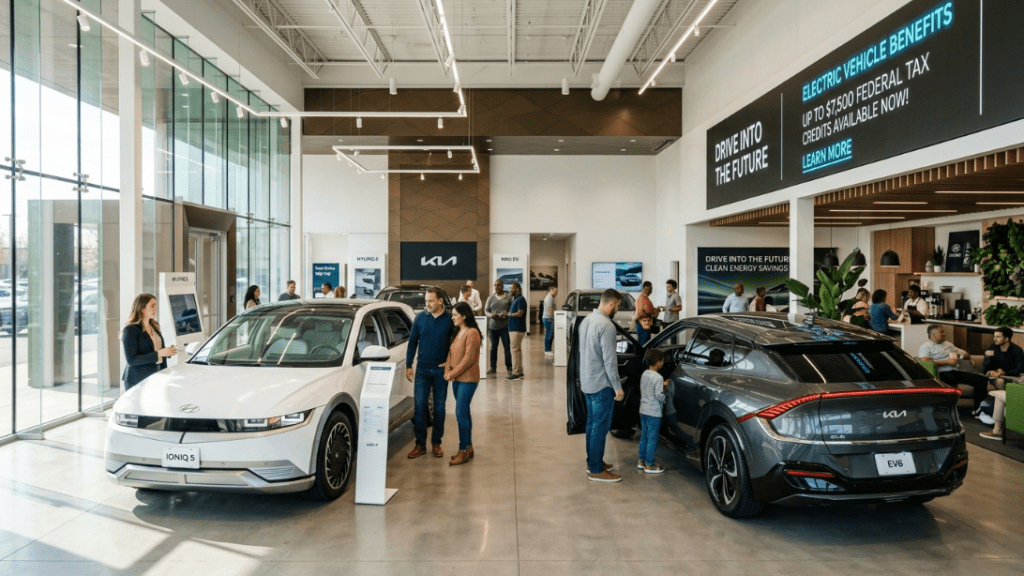
Buying an Electric Car in 2026: What You Need to Know
The EV landscape has changed dramatically. Three years ago, you were basically choosing between Tesla and a handful of compromised alternatives. Today? You’ve got legitimate competition at every price point — from the affordable Chevrolet Equinox EV starting around $35,000 to the premium Hyundai Ioniq 6 that charges faster than almost anything else on the market.
18%of new U.S. car sales are now electric or plug-in hybrid
70,000+public charging stations now active across the U.S.
$7,500maximum federal EV tax credit still available in 2026
Infrastructure has improved significantly. Most major highways now have fast chargers every 50–70 miles, and networks like Tesla Supercharger (now open to non-Tesla EVs), Electrify America, and EVgo have expanded their reliability. That said, the charging experience still isn’t as seamless as filling a tank — and you need to plan accordingly.
You Should Also Check This
Best EVs Under $35K in 2026
Home Charging Tips for First-Time EV Buyers
This is the single most important thing about owning an EV — and most first-time buyers don’t think about it until after they’ve signed the papers.
If you can charge at home, owning an EV is almost always cheaper and more convenient than owning a gas car. You wake up every morning with a “full tank.” If you can’t charge at home — say, you park on a city street or in a shared apartment lot — your math changes entirely.
Most first-time EV buyers don’t realize this: home charging costs about $30–$60/month vs. $150–$200 for gas.
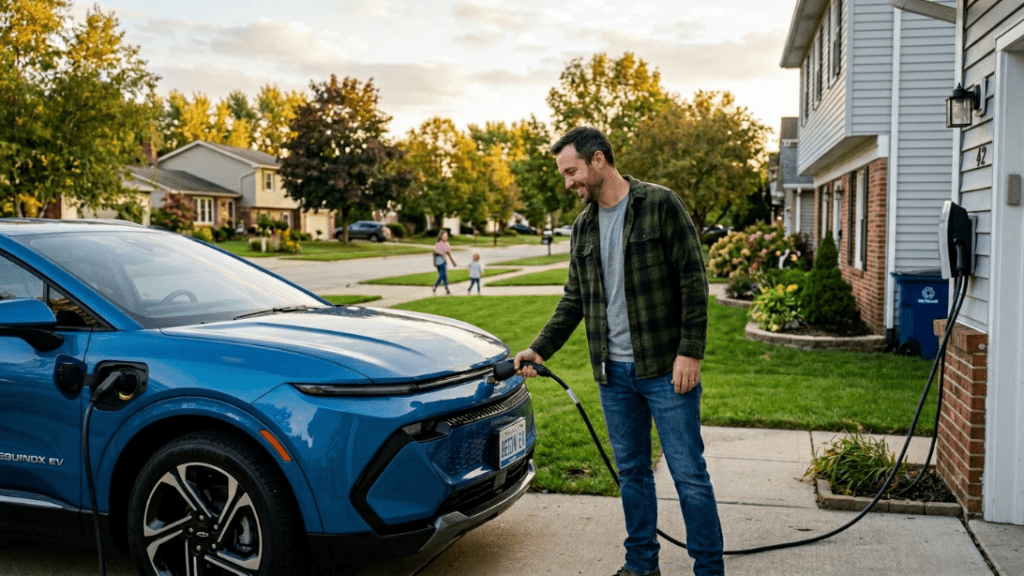
Level 1 vs Level 2 Home Charging
- Level 1 (120V outlet): Adds about 3–5 miles of range per hour. Fine if you drive under 30 miles/day, but very slow for longer commutes.
- Level 2 (240V home charger): Adds 20–30 miles per hour. This is what most EV owners install. A full overnight charge brings most EVs from 20% to 100%.
- Installation cost: Expect to pay $500–$1,200 for a Level 2 charger installation, including the hardware and electrician. Many utility companies offer rebates that cut this significantly.
- Off-peak charging: Most utilities charge lower rates at night (10 PM–6 AM). Charging during these hours can cut your monthly electricity cost nearly in half.
A Level 2 home charger pays for itself in fuel savings within 12–18 months for most American drivers.
⬡ ⬡ ⬡
Public Charging Guide Before Buying an Electric Car in 2026
Public charging anxiety is real — but it’s also becoming less justified every year. Here’s an honest breakdown of what you’ll actually experience.
What’s working well in 2026
- Tesla’s Supercharger network is now open to most major EV brands via CCS/NACS adapters — this is a genuine game-changer
- DC Fast Chargers (Level 3) can add 100–200 miles of range in 20–30 minutes
- Charging along major interstates (I-95, I-10, I-40) is now reliable enough for comfortable road trips
- Plug-and-charge technology means you just plug in — no apps or cards needed on newer networks
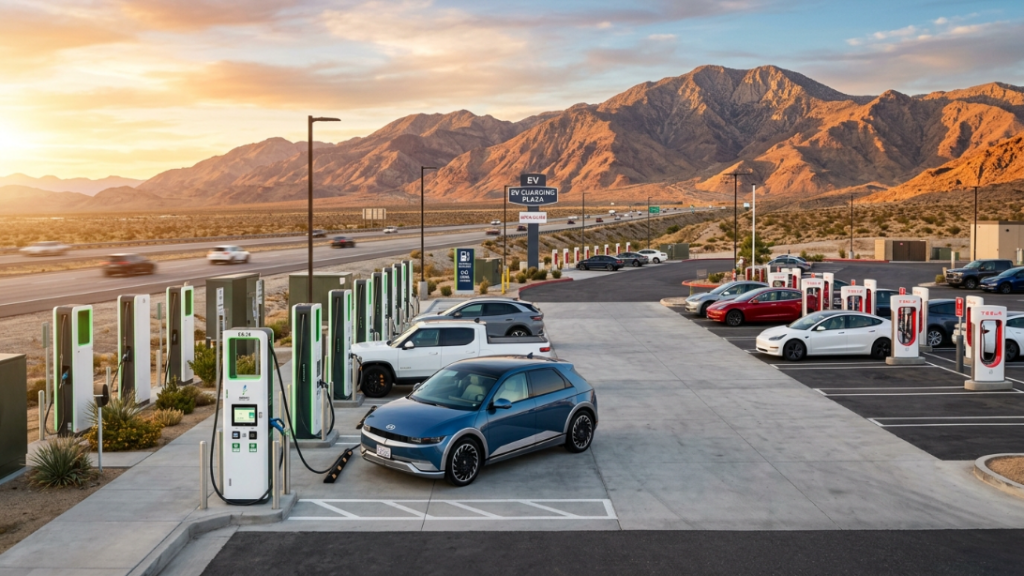
Where it still gets frustrating
- Rural areas and smaller towns still have significant coverage gaps
- Broken chargers (especially older Electrify America stations) remain a real issue — always have a backup plan
- Peak-hour wait times at popular chargers can be 15–30 minutes on holiday weekends
- Charging speed varies hugely by car — not all EVs accept DC fast charging at high rates
Pro tip: Before a road trip, use PlugShare to map charging stops in advance. Mark stations with recent successful check-ins — not just ones on the map.
⬡ ⬡ ⬡
Real Costs of Buying an Electric Car in 2026
The Inflation Reduction Act’s EV tax credit is still one of the best deals in consumer finance — but it comes with conditions, and this mistake can cost you thousands.
Who qualifies in 2026?
- Income limits: Single filers earning under $150,000 / joint filers under $300,000 / head of household under $225,000
- Vehicle price limits: New sedans and hatchbacks must MSRP under $55,000. SUVs, trucks, and vans must be under $80,000
- Vehicle eligibility: Must be assembled in North America with battery components from approved sources — check IRS.gov for the current list before you shop
- Point-of-sale credit: Since 2024, dealerships can apply the credit directly at purchase, so you don’t have to wait for tax season
Watch out: Not all EVs qualify. Some popular models — including several imported versions — no longer qualify under the North American assembly requirement. Always verify on the IRS website before shopping.
You Can Also Check This
Tesla Model 3 vs Hyundai Ioniq 6: Which EV Is Better in 2026?
⬡ ⬡ ⬡
EV Battery Life: The Question Everyone Asks
Here’s the surprising part — EV batteries are holding up much better than early critics predicted.
Most modern EV batteries come with 8-year/100,000-mile warranties. Real-world data from Tesla, Hyundai, and other brands shows that most batteries retain 80–90% of their original capacity after 150,000 miles. The scary stories about $15,000 battery replacements are largely from first-gen EVs — today’s chemistry is significantly more durable.
- Avoid charging to 100% daily — most manufacturers recommend 80% for everyday use
- Avoid letting the battery drop below 10% regularly
- Frequent DC fast charging does degrade batteries slightly faster than Level 2 — don’t rely on it for daily charging
- Cold weather temporarily reduces range (15–30% in below-freezing temps) but does not cause permanent damage
⬡ ⬡ ⬡
The Real Cost of Owning an EV (Including Hidden Ones)
The sticker price isn’t the whole story. Here’s a breakdown most dealerships won’t give you upfront.
Where EVs save you money
- No oil changes, transmission fluid, or spark plugs — EV maintenance costs run 30–40% less than gas cars
- Regenerative braking massively extends brake pad life — many EV owners go 70,000+ miles on original pads
- Fuel costs: charging at home averages $0.03–0.05/mile vs. $0.12–0.15/mile for gas
- Some states offer additional rebates, HOV lane access, and reduced registration fees
Hidden costs to budget for
- Home charger installation: $500–$1,200 (one-time)
- Higher insurance premiums: EV parts and repairs cost more — expect 10–20% higher than comparable gas cars
- Tire wear: EVs are heavier and have instant torque — tires wear faster, especially performance models
- Public charging on road trips: DC fast charging costs $0.30–0.50/kWh — similar to gas if you’re always charging fast
The average American EV owner saves $700–$1,200/year on fuel and maintenance combined. Over 5 years, that’s real money.
⬡ ⬡ ⬡
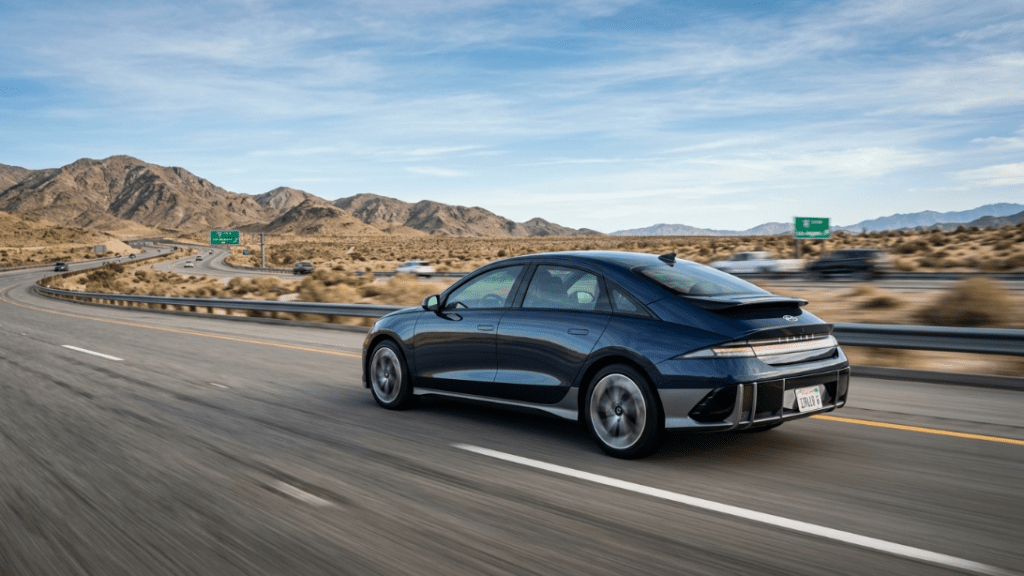
Best EV Models for Buying an Electric Car in 2026
Tesla still makes buying an electric car in 2026 excellent EVs. But the gap between Tesla and the competition has narrowed significantly — in some areas, it’s closed entirely.
| Model | Range | Starting MSRP | Charging Speed | Best For |
|---|---|---|---|---|
| Tesla Model 3 Popular | 358 mi | ~$40,240 | 250 kW (V3 SC) | Tech lovers, long trips |
| Hyundai Ioniq 6 | 361 mi | ~$38,615 | 350 kW (peak) | Fastest charging, value |
| Kia EV6 Best Value | 310 mi | ~$42,600 | 240 kW | Practicality + style |
| Chevrolet Equinox EV | 319 mi | ~$35,000 | 150 kW | Budget-conscious families |
| Ford Mustang Mach-E | 312 mi | ~$42,995 | 150 kW | SUV fans, Blue Oval loyalty |
| Hyundai Ioniq 5 | 303 mi | ~$41,450 | 350 kW (peak) | Families, cargo space |
Prices and range are approximate 2026 estimates. Always verify current MSRP and confirm federal tax credit eligibility before purchasing.
⬡ ⬡ ⬡
Cold Weather Tips for Buying an Electric Car in 2026
Cold weather reduces EV range. This is the part no one likes to talk about, but it’s important to understand before you decide.first-time EV buyer
In sub-freezing temperatures, you can expect 15–30% range loss. For a car rated at 300 miles, that means roughly 210–255 miles in a Minnesota January. That’s still more than enough for most daily driving — the average American drives 37 miles per day — but it does require planning for winter road trips.
- Pre-condition your battery while still plugged in (most EVs let you do this via app)
- Seat heaters use less energy than cabin heaters — use them first
- Cold-weather range is improving every model year — 2025–2026 models handle cold significantly better than 2021–2022 vehicles
⬡ ⬡ ⬡
Resale Value: What to Expect
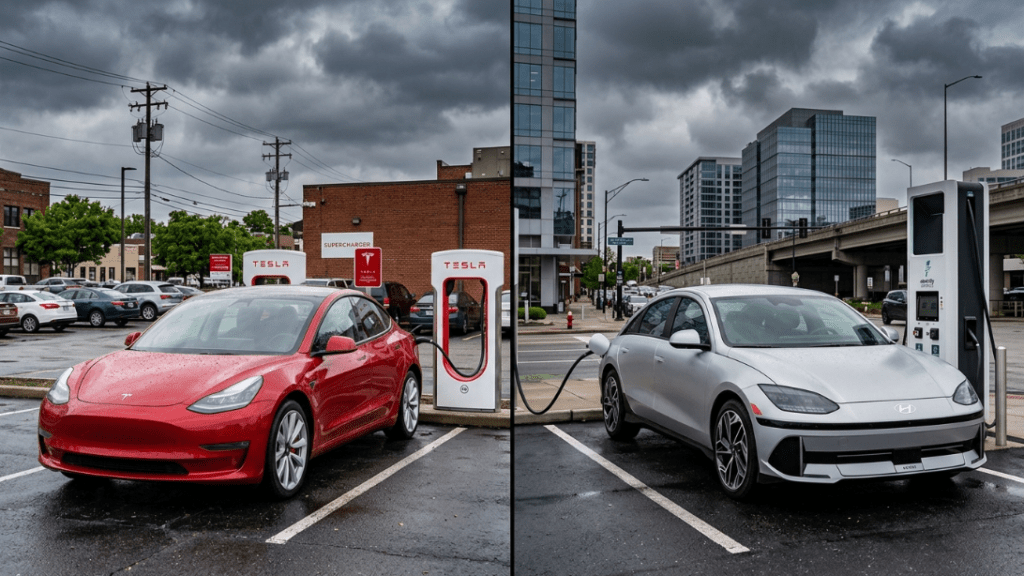
EV resale value is complicated. Teslas tend to hold value reasonably well. Many non-Tesla EVs — especially pre-2023 models — have depreciated sharply as new, cheaper models entered the market.
In 2026, the resale picture is stabilizing. Cars like the Kia EV6 and Hyundai Ioniq 5 are showing stronger residuals as the brands have earned trust. The Chevy Equinox EV’s lower purchase price also means lower absolute depreciation risk.
Insider tip: If you’re buying new and plan to keep the car 4–5+ years, depreciation matters less. If you’re the type who trades every 2–3 years, lease an EV rather than buy — you avoid early-cycle depreciation and still get the car experience.
You Should Also Check This
Tesla vs BYD: Which EV Brand Is Better in 2026?
⬡ ⬡ ⬡
Electric Cars in 2026: Pros and Cons
✅ The Pros
- Lower fuel costs ($30–60/mo vs $150–200)
- Significantly less maintenance
- Up to $7,500 federal tax credit
- Smoother, quieter driving experience
- Wake up every day with a “full tank”
- HOV lane access in many states
- Regenerative braking saves on brakes
- Better for the environment long-term
❌ The Cons
- Higher upfront purchase price
- Charging takes longer than fueling
- Range anxiety on unfamiliar routes
- Cold weather reduces range 15–30%
- Public charger reliability still uneven
- Higher insurance premiums
- Not ideal for apartment dwellers
- Rapid model changes = faster depreciation
⬡ ⬡ ⬡
Frequently Asked Questions
Is 2026 a good time to buy an electric car?+
Yes — for most buyers. Prices have dropped, ranges have improved, and the charging network is significantly better than three years ago. If you have home charging access and drive under 200 miles daily, you’ll likely love it. If you live in a rural area far from charging infrastructure or park on a street with no outlet access, wait another year or two.
What is the federal EV tax credit in 2026?+
How much does it cost to charge an electric car at home?+
What is the best electric car for first-time buyers in 2026?+
Do electric cars work in cold weather?+
How long does an EV battery last?+
Can I take a Tesla Supercharger with a non-Tesla EV?+
⬡ ⬡ ⬡
Final Verdict on Buying an Electric Car in 2026
If you have a driveway or garage, drive mostly in urban or suburban areas, and can take advantage of the federal tax credit — yes, 2026 is a fantastic year to go electric.
The technology is mature. The charging network is functional. The savings are real. And the driving experience? Genuinely better than most gas cars at the same price point.
If you’re a rural driver covering lots of open highway miles with limited charging access, or you park on a city street with no charging option, you have legitimate reasons to wait another 1–2 years.
For the majority of American drivers, though? The switch makes sense. The question isn’t really if anymore — it’s which one.
Ready to Find Your Perfect EV?
Browse our in-depth comparisons, real-owner reviews, and up-to-date pricing on Wheelinity — your honest guide to America’s best electric vehicles.🔋 Compare Top EVs for 2026 ↗Calculate My Savings